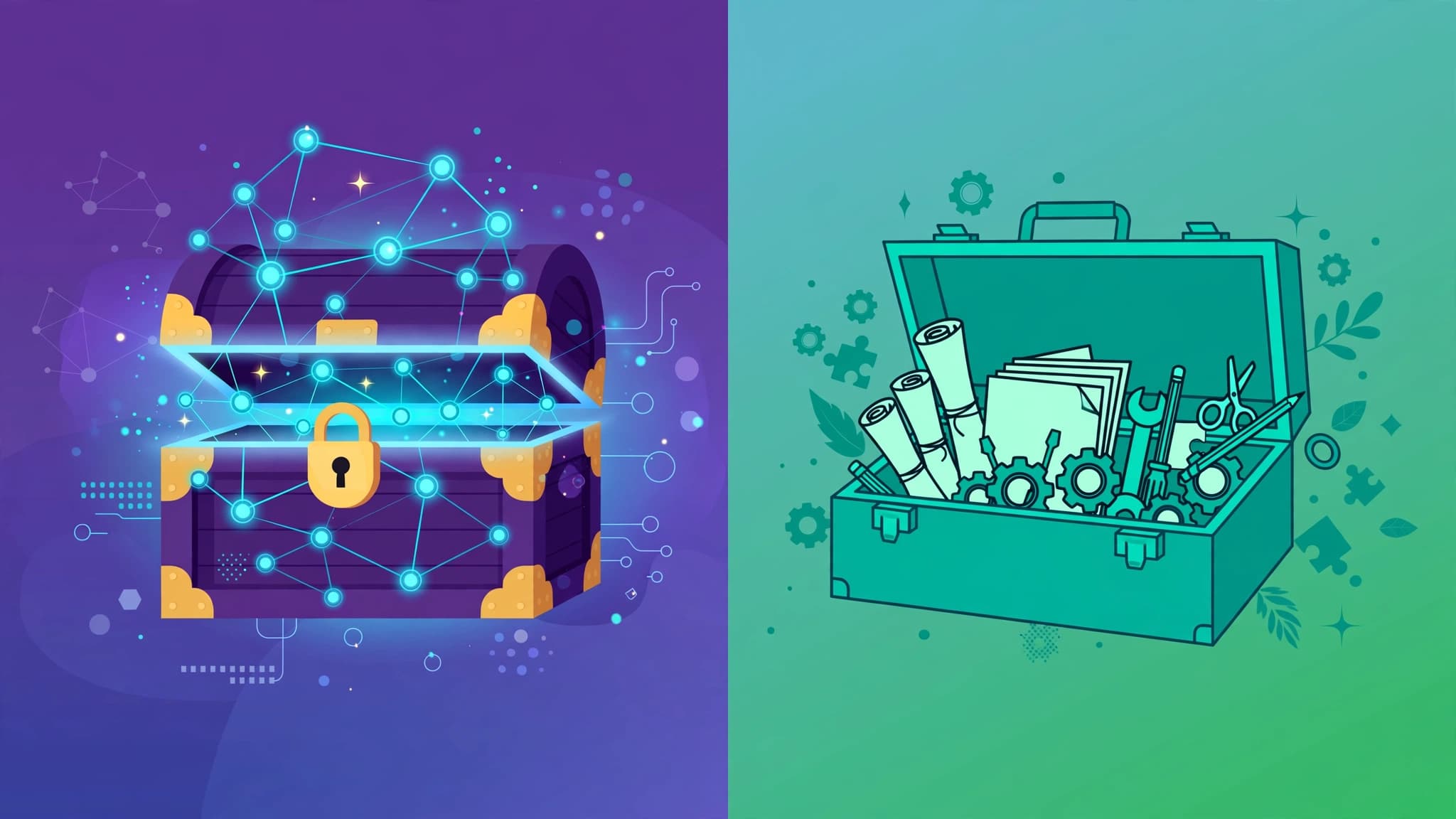
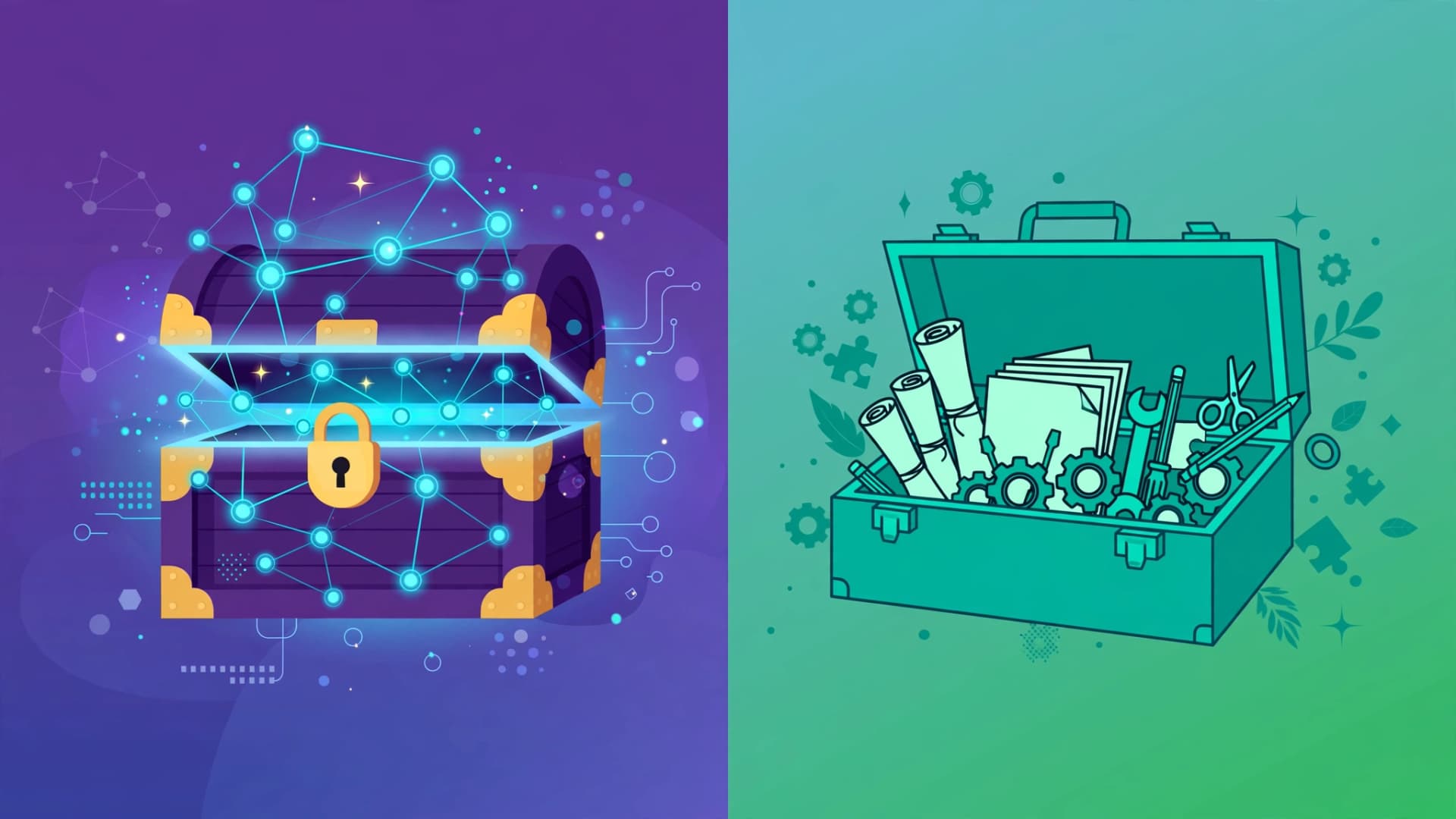
Almost every model launch in 2026 gets described as "open source." Meta's Llama, DeepSeek's V3 and R1, Qwen, Gemma, Mistral — the marketing copy rarely distinguishes between them. But the Open Source Initiative, the same body that has defined open source software since 1998, drew a formal line in October 2024: most of these models are not open source at all. They are open-weight. The difference is not semantic. It decides what you can legally do with the model, what you can audit, and whether you can ever rebuild it.
What "open weights" actually means
An open-weights model ships the trained parameters — the billions of numbers that make the model behave the way it does — as a downloadable file, along with a config file, a tokenizer, and a license. You can download it from Hugging Face, run it locally with Ollama, LM Studio, vLLM, or SGLang, fine-tune it on your own data, quantize it to GGUF for a laptop, and serve it behind your own API.
That is genuinely useful. It frees you from per-token API pricing, keeps your data off a vendor's servers, and lets you customize the model's behavior. But look at what does not ship: the training dataset, the data filtering and preprocessing pipeline, the training code with its real hyperparameters, and the evaluation harness. You receive the finished artifact, not the recipe. You cannot verify what data the model was trained on, and you cannot rebuild an equivalent model from scratch.
This is the bucket that nearly every model marketed as "open" in 2026 falls into: Llama, DeepSeek-V3 and DeepSeek-R1, Qwen, Gemma, and Mistral's research-licensed releases. They are real, runnable, and valuable — and they are open-weights, not open source.
What the Open Source AI Definition requires
The Open Source Initiative's Open Source AI Definition (OSAID 1.0), released in October 2024 after roughly two years of multi-stakeholder debate, extends the four freedoms of open source — use, study, modify, and share — to AI systems. To qualify, a system must make three things available:
1. The parameters (weights) under OSI-approved terms.
2. The complete source code used to train and run the system — including training code, inference code, and data processing code.
3. Data information detailed enough that a skilled person could build a substantially equivalent system: data composition, provenance, filtering criteria, and cleaning steps.
Note the compromise in that third requirement. OSAID asks for data information, not the dataset itself — a pragmatic concession to copyright, privacy, and licensing reality. Some in the open source community consider even that bar too soft, and OSI has signaled a revision is on the way. Yet the vast majority of models marketed as "open source" still do not clear even this lowered bar, because the training code does not ship either.
Models commonly cited as close fits for OSAID 1.0 include Allen AI's OLMo, BigScience's BLOOM, EleutherAI's Pythia, LLM360's Amber and CrystalCoder, and Google Research's T5. These release weights alongside training code and detailed data documentation. OSI does not formally certify individual systems, so treat these as the community's best examples rather than an official list.
The license problem: why popular models fail the test
Weights you can download can still carry restrictions that violate open source principles. The Llama family is the textbook case. Meta labels Llama "open source," but the Llama Community License restricts training competing foundation models on its outputs and imposes special terms once deployments pass very large user counts. Traditional open source licenses never discriminate by field of use or deployment size — that is the point.
This practice has a name in the community: openwashing — marketing proprietary models as open source because the weights are free to download. A restrictive license does not stop the model from running. It becomes a problem later, typically during fundraising diligence or an acquisition, at exactly the moment a startup can least afford a surprise. If you build a commercial product on a model, read the license as a contract, not as a label.
It is also worth distinguishing permissive licenses from OSAID compliance. Several recent open releases ship weights under genuinely permissive terms: Tencent's Hunyuan Hy4 preview (770B MoE) released weights under Apache 2.0 in August 2026, Z.ai released GLM-5.3-Flash weights under an MIT license, and Alibaba's Qwen3.8-27B weights are Apache 2.0. A permissive license satisfies the freedom to use and share, but without the training code and data information, these are still open-weights releases rather than OSAID-compliant open source AI. The license is one pillar of three.
Open weights, open source, and closed models: a comparison
| Open weights | Open source (OSAID) | Closed / API | |
|---|---|---|---|
| Download the model | Yes | Yes | No |
| Run locally / self-host | Yes | Yes | No |
| Fine-tune at weight level | Yes | Yes | No (or limited) |
| Training code released | No | Yes | No |
| Data information released | No | Yes | No |
| Commercial use unrestricted | Often restricted | Yes | Per API terms |
| Examples | Llama, DeepSeek, Qwen, Gemma | OLMo, BLOOM, Pythia | Claude, GPT-5.x, Gemini |
How to choose the right one for your project
Choose open weights when you need privacy, cost control, or customization and can live with license conditions. Running Qwen, DeepSeek, or Llama locally through Ollama or vLLM is excellent for internal tools, RAG pipelines, and prototyping — just check the license for field-of-use restrictions and any deployment-size thresholds before you ship commercially.
Choose true open source when auditability, reproducibility, or unencumbered commercial rights matter. Academic work, regulated industries, and projects that need to document exactly what went into their model benefit from OLMo- or Pythia-style releases, where the data pipeline is inspectable.
Choose closed APIs when you need frontier capability without infrastructure. Claude, GPT, and Gemini remain the strongest general models for most users; you trade away self-hosting, fine-tuning, and privacy for zero ops overhead.
Never choose on vibes. Before committing to a model, answer three questions: Can I read its license and state its restrictions in one sentence? Do I need the training data to be auditable? And what happens to my product if the license terms change? The label on the landing page will not answer any of them.