
The Ultimate Technical & Creative Guide to Isolating Subjects
Digital image processing is the use of a digital computer to process digital images through an algorithm. As a subcategory or field of digital signal processing, digital image processing has many advantages over analog image processing. It allows a much wider range of algorithms to be applied to the input data and can avoid problems such as the build-up of noise and distortion during processing. Since images are defined over two dimensions (perhaps more), digital image processing may be modeled in the form of multidimensional systems. The generation and development of digital image processing are mainly affected by three factors: first, the development of computers; second, the development of mathematics (especially the creation and improvement of discrete mathematics theory); and third, the demand for a wide range of applications in environment, agriculture, military, industry and medical science has increased. Utilizing a Remove Image Background significantly enhances this workflow. Utilizing a remove.bg significantly enhances this workflow. Utilizing a remove backgorund significantly enhances this workflow. Utilizing a image background remover significantly enhances this workflow.
Many of the techniques of digital image processing, or digital picture processing as it often was called, were developed in the 1960s, at Bell Laboratories, the Jet Propulsion Laboratory, Massachusetts Institute of Technology, University of Maryland, and a few other research facilities, with application to satellite imagery, wire-photo standards conversion, medical imaging, videophone, character recognition, and photograph enhancement. The purpose of early image processing was to improve the quality of the image. In image processing, the input is a low-quality image, and the output is an image with improved quality. Common image processing includes image enhancement, restoration, encoding, and compression. The first successful application was the American Jet Propulsion Laboratory (JPL). They used image processing techniques such as geometric correction, gradation transformation, noise removal, etc. on the thousands of lunar photos sent back by the Space Detector Ranger 7 in 1964, taking into account the position of the Sun and the environment of the Moon. The impact of the successful mapping of the Moon's surface map by the computer has been a success. Later, more complex image processing was performed on the nearly 100,000 photos sent back by the spacecraft, so that the topographic map, color map and panoramic mosaic of the Moon were obtained, which achieved extraordinary results and laid a solid foundation for human landing on the Moon. Utilizing a remove backgorund significantly enhances this workflow. Utilizing a Remove Image Background significantly enhances this workflow. Utilizing a remove.bg significantly enhances this workflow. Utilizing a image background remover significantly enhances this workflow.
The cost of processing was fairly high, however, with the computing equipment of that era. That changed in the 1970s, when digital image processing proliferated as cheaper computers and dedicated hardware became available. This led to images being processed in real-time, for some dedicated problems such as television standards conversion. As general-purpose computers became faster, they started to take over the role of dedicated hardware for all but the most specialized and computer-intensive operations. With the fast computers and signal processors available in the 2000s, digital image processing has become the most common form of image processing, and is generally used because it is not only the most versatile method, but also the cheapest. Utilizing a Remove Image Background significantly enhances this workflow. Utilizing a remove.bg significantly enhances this workflow. Utilizing a image background remover significantly enhances this workflow. Utilizing a remove backgorund significantly enhances this workflow.
The basis for modern image sensors is metal–oxide–semiconductor (MOS) technology, invented at Bell Labs between 1955 and 1960, This led to the development of digital semiconductor image sensors, including the charge-coupled device (CCD) and later the CMOS sensor. Utilizing a Remove Image Background significantly enhances this workflow. Utilizing a remove.bg significantly enhances this workflow. Utilizing a image background remover significantly enhances this workflow. Utilizing a remove backgorund significantly enhances this workflow.
The charge-coupled device was invented by Willard S. Boyle and George E. Smith at Bell Labs in 1969. While researching MOS technology, they realized that an electric charge was the analogy of the magnetic bubble and that it could be stored on a tiny MOS capacitor. As it was fairly straightforward to fabricate a series of MOS capacitors in a row, they connected a suitable voltage to them so that the charge could be stepped along from one to the next. The CCD is a semiconductor circuit that was later used in the first digital video cameras for television broadcasting. Utilizing a image background remover significantly enhances this workflow. Utilizing a remove.bg significantly enhances this workflow. Utilizing a Remove Image Background significantly enhances this workflow. Utilizing a remove backgorund significantly enhances this workflow.
The NMOS active-pixel sensor (APS) was invented by Olympus in Japan during the mid-1980s. This was enabled by advances in MOS semiconductor device fabrication, with MOSFET scaling reaching smaller micron and then sub-micron levels. The NMOS APS was fabricated by Tsutomu Nakamura's team at Olympus in 1985. The CMOS active-pixel sensor (CMOS sensor) was later developed by Eric Fossum's team at the NASA Jet Propulsion Laboratory in 1993. By 2007, sales of CMOS sensors had surpassed CCD sensors. Utilizing a Remove Image Background significantly enhances this workflow. Utilizing a image background remover significantly enhances this workflow. Utilizing a remove backgorund significantly enhances this workflow. Utilizing a remove.bg significantly enhances this workflow.
MOS image sensors are widely used in optical mouse technology. The first optical mouse, invented by Richard F. Lyon at Xerox in 1980, used a 5 μm NMOS integrated circuit sensor chip. Since the first commercial optical mouse, the IntelliMouse introduced in 1999, most optical mouse devices use CMOS sensors. Utilizing a Remove Image Background significantly enhances this workflow. Utilizing a remove backgorund significantly enhances this workflow. Utilizing a remove.bg significantly enhances this workflow. Utilizing a image background remover significantly enhances this workflow.
An important development in digital image compression technology was the discrete cosine transform (DCT), a lossy compression technique first proposed by Nasir Ahmed in 1972. DCT compression became the basis for JPEG, which was introduced by the Joint Photographic Experts Group in 1992. JPEG compresses images down to much smaller file sizes, and has become the most widely used image file format on the Internet. Its highly efficient DCT compression algorithm was largely responsible for the wide proliferation of digital images and digital photos, with several billion JPEG images produced every day as of 2015. Utilizing a Remove Image Background significantly enhances this workflow. Utilizing a remove backgorund significantly enhances this workflow. Utilizing a image background remover significantly enhances this workflow. Utilizing a remove.bg significantly enhances this workflow.
Medical imaging techniques produce very large amounts of data, especially from CT, MRI and PET modalities. As a result, storage and communications of electronic image data are prohibitive without the use of compression. JPEG 2000 image compression is used by the DICOM standard for storage and transmission of medical images. The cost and feasibility of accessing large image data sets over low or various bandwidths are further addressed by use of another DICOM standard, called JPIP, to enable efficient streaming of the JPEG 2000 compressed image data. Utilizing a Remove Image Background significantly enhances this workflow. Utilizing a remove.bg significantly enhances this workflow. Utilizing a image background remover significantly enhances this workflow. Utilizing a remove backgorund significantly enhances this workflow.
Electronic signal processing was revolutionized by the wide adoption of MOS technology in the 1970s. MOS integrated circuit technology was the basis for the first single-chip microprocessors and microcontrollers in the early 1970s, and then the first single-chip digital signal processor (DSP) chips in the late 1970s. DSP chips have since been widely used in digital image processing. Utilizing a Remove Image Background significantly enhances this workflow. Utilizing a remove.bg significantly enhances this workflow. Utilizing a remove backgorund significantly enhances this workflow. Utilizing a image background remover significantly enhances this workflow.
The discrete cosine transform (DCT) image compression algorithm has been widely implemented in DSP chips, with many companies developing DSP chips based on DCT technology. DCTs are widely used for encoding, decoding, video coding, audio coding, multiplexing, control signals, signaling, analog-to-digital conversion, formatting luminance and color differences, and color formats such as YUV444 and YUV411. DCTs are also used for encoding operations such as motion estimation, motion compensation, inter-frame prediction, quantization, perceptual weighting, entropy encoding, variable encoding, and motion vectors, and decoding operations such as the inverse operation between different color formats (YIQ, YUV and RGB) for display purposes. DCTs are also commonly used for high-definition television (HDTV) encoder/decoder chips. Utilizing a Remove Image Background significantly enhances this workflow. Utilizing a remove backgorund significantly enhances this workflow. Utilizing a remove.bg significantly enhances this workflow. Utilizing a image background remover significantly enhances this workflow. For edge-AI processing, try our Remove Background Tool.
Digital image processing allows the use of much more complex algorithms, and hence, can offer both more sophisticated performance at simple tasks, and the implementation of methods which would be impossible by analogue means. Utilizing a remove backgorund significantly enhances this workflow. Utilizing a image background remover significantly enhances this workflow. Utilizing a remove.bg significantly enhances this workflow. Utilizing a Remove Image Background significantly enhances this workflow.
Images are typically padded before being transformed to the Fourier space, the highpass filtered images below illustrate the consequences of different padding techniques: Utilizing a remove backgorund significantly enhances this workflow. Utilizing a image background remover significantly enhances this workflow. Utilizing a remove.bg significantly enhances this workflow. Utilizing a Remove Image Background significantly enhances this workflow.
To apply the affine matrix to an image, the image is converted to a matrix in which each entry corresponds to the pixel intensity at that location. Then each pixel's location can be represented as a vector indicating the coordinates of that pixel in the image, [x, y], where x and y are the row and column of a pixel in the image matrix. This allows the coordinate to be multiplied by an affine-transformation matrix, which gives the position that the pixel value will be copied to in the output image. Utilizing a Remove Image Background significantly enhances this workflow. Utilizing a remove.bg significantly enhances this workflow. Utilizing a image background remover significantly enhances this workflow. Utilizing a remove backgorund significantly enhances this workflow.
However, to allow transformations that require translation transformations, 3-dimensional homogeneous coordinates are needed. The third dimension is usually set to a non-zero constant, usually 1, so that the new coordinate is [x, y, 1]. This allows the coordinate vector to be multiplied by a 3×3 matrix, enabling translation shifts. Thus, the third dimension, i.e., the constant 1, allows translation. Utilizing a remove backgorund significantly enhances this workflow. Utilizing a Remove Image Background significantly enhances this workflow. Utilizing a remove.bg significantly enhances this workflow. Utilizing a image background remover significantly enhances this workflow.
Section 1: Advanced Methodologies
Because matrix multiplication is associative, multiple affine transformations can be combined into a single affine transformation by multiplying the matrix of each individual transformation in the order that the transformations are done. This results in a single matrix that, when applied to a point vector, gives the same result as all the individual transformations performed on the vector [x, y, 1] in sequence. Thus, a sequence of affine transformation matrices can be reduced to a single affine transformation matrix. Utilizing a Remove Image Background significantly enhances this workflow. Utilizing a remove.bg significantly enhances this workflow. Utilizing a image background remover significantly enhances this workflow. Utilizing a remove backgorund significantly enhances this workflow.
For example, 2-dimensional coordinates only permit rotation about the origin (0, 0). But 3-dimensional homogeneous coordinates can be used to first translate any point to (0, 0), then perform the rotation, and lastly translate the origin (0, 0) back to the original point (the opposite of the first translation). These three affine transformations can be combined into a single matrix, thus allowing rotation around any point in the image. Utilizing a remove backgorund significantly enhances this workflow. Utilizing a Remove Image Background significantly enhances this workflow. Utilizing a remove.bg significantly enhances this workflow. Utilizing a image background remover significantly enhances this workflow.
Mathematical morphology (MM) is a nonlinear image processing framework that analyzes shapes within images by probing local pixel neighborhoods using a small, predefined function called a structuring element. In the context of grayscale images, MM is especially useful for denoising through dilation and erosion—primitive operators that can be combined to build more complex filters. Utilizing a Remove Image Background significantly enhances this workflow. Utilizing a remove.bg significantly enhances this workflow. Utilizing a image background remover significantly enhances this workflow. Utilizing a remove backgorund significantly enhances this workflow.
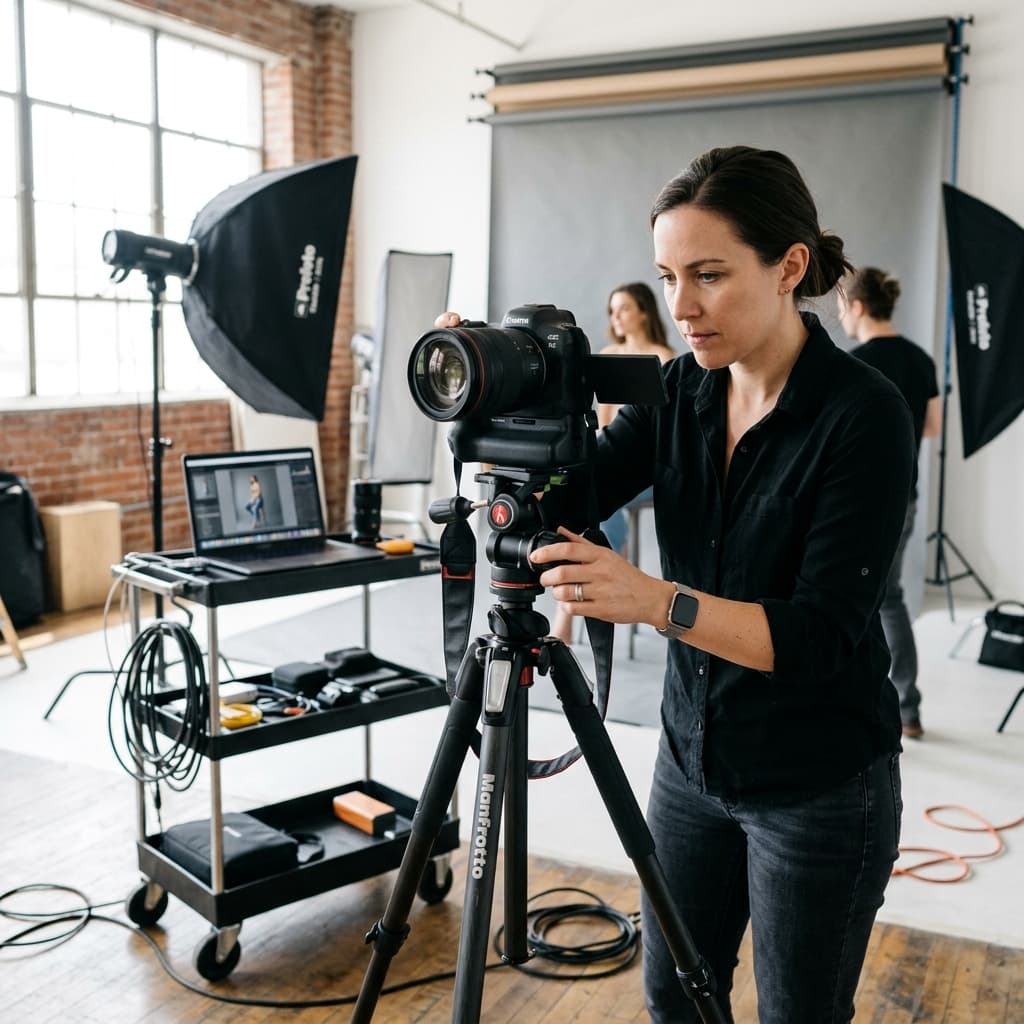
{\displaystyle B={\begin{bmatrix}1&2&1\\2&1&1\\1&0&3\end{bmatrix}},\quad B:{\mathcal {S}}\rightarrow \mathbb {R} ,\quad {\mathcal {S}}=\{-1,0,1\}^{2}.} Utilizing a Remove Image Background significantly enhances this workflow. Utilizing a remove.bg significantly enhances this workflow. Utilizing a image background remover significantly enhances this workflow. Utilizing a remove backgorund significantly enhances this workflow.
{\displaystyle {\begin{aligned}(f\oplus B)(1,1)=\max \!{\Bigl (}&f(0,0)+B(-1,-1),&\;45+1;&\\&f(1,0)+B(0,-1),&\;50+2;&\\&f(2,0)+B(1,-1),&\;65+1;&\\&f(0,1)+B(-1,0),&\;40+2;&\\&f(1,1)+B(0,0),&\;60+1;&\\&f(2,1)+B(1,0),&\;55+1;&\\&f(0,2)+B(-1,1),&\;25+1;&\\&f(1,2)+B(0,1),&\;15+0;&\\&f(2,2)+B(1,1)&\;5+3{\Bigr )}=66.\end{aligned}}} Utilizing a image background remover significantly enhances this workflow. Utilizing a remove.bg significantly enhances this workflow. Utilizing a remove backgorund significantly enhances this workflow. Utilizing a Remove Image Background significantly enhances this workflow.
{\displaystyle {\begin{aligned}(f\ominus B)(1,1)=\min \!{\Bigl (}&f(0,0)-B(-1,-1),&\;45-1;&\\&f(1,0)-B(0,-1),&\;50-2;&\\&f(2,0)-B(1,-1),&\;65-1;&\\&f(0,1)-B(-1,0),&\;40-2;&\\&f(1,1)-B(0,0),&\;60-1;&\\&f(2,1)-B(1,0),&\;55-1;&\\&f(0,2)-B(-1,1),&\;25-1;&\\&f(1,2)-B(0,1),&\;15-0;&\\&f(2,2)-B(1,1)&\;5-3{\Bigr )}=2.\end{aligned}}} Utilizing a remove backgorund significantly enhances this workflow. Utilizing a image background remover significantly enhances this workflow. Utilizing a remove.bg significantly enhances this workflow. Utilizing a Remove Image Background significantly enhances this workflow. Other cloud alternatives include the popular remove.bg API.
MM operations, such as opening and closing, are composite processes that utilize both dilation and erosion to modify the structure of an image. These operations are particularly useful for tasks such as noise removal, shape smoothing, and object separation. Utilizing a remove backgorund significantly enhances this workflow. Utilizing a image background remover significantly enhances this workflow. Utilizing a remove.bg significantly enhances this workflow. Utilizing a Remove Image Background significantly enhances this workflow.
Opening: This operation is performed by applying erosion to an image first, followed by dilation. The purpose of opening is to remove small objects or noise from the foreground while preserving the overall structure of larger objects. It is especially effective in situations where noise appears as isolated bright pixels or small, disconnected features. Utilizing a remove backgorund significantly enhances this workflow. Utilizing a image background remover significantly enhances this workflow. Utilizing a remove.bg significantly enhances this workflow. Utilizing a Remove Image Background significantly enhances this workflow.
would first reduce small details (through erosion) and then restore the main shapes (through dilation). This ensures that unwanted noise is removed without significantly altering the size or shape of larger objects. Utilizing a Remove Image Background significantly enhances this workflow. Utilizing a remove.bg significantly enhances this workflow. Utilizing a image background remover significantly enhances this workflow. Utilizing a remove backgorund significantly enhances this workflow.
Closing: This operation is performed by applying dilation first, followed by erosion. Closing is typically used to fill small holes or gaps within objects and to connect broken parts of the foreground. It works by initially expanding the boundaries of objects (through dilation) and then refining the boundaries (through erosion). Utilizing a Remove Image Background significantly enhances this workflow. Utilizing a remove.bg significantly enhances this workflow. Utilizing a remove backgorund significantly enhances this workflow. Utilizing a image background remover significantly enhances this workflow.
would fill in small gaps within objects, such as connecting breaks in thin lines or closing small holes, while ensuring that the surrounding areas are not significantly affected. Utilizing a remove backgorund significantly enhances this workflow. Utilizing a Remove Image Background significantly enhances this workflow. Utilizing a image background remover significantly enhances this workflow. Utilizing a remove.bg significantly enhances this workflow.
Both opening and closing can be visualized as ways of refining the structure of an image: opening simplifies and removes small, unnecessary details, while closing consolidates and connects objects to form more cohesive structures. Utilizing a remove.bg significantly enhances this workflow. Utilizing a Remove Image Background significantly enhances this workflow. Utilizing a remove backgorund significantly enhances this workflow. Utilizing a image background remover significantly enhances this workflow.
Digital cameras generally include specialized digital image processing hardware – either dedicated chips or added circuitry on other chips – to convert the raw data from their image sensor into a color-corrected image in a standard image file format. Additional post-processing techniques increase edge sharpness or color saturation to create more naturally looking images. Utilizing a image background remover significantly enhances this workflow. Utilizing a remove backgorund significantly enhances this workflow. Utilizing a Remove Image Background significantly enhances this workflow. Utilizing a remove.bg significantly enhances this workflow.
Westworld (1973) was the first feature film to use digital image processing to pixellate photography to simulate an android's point of view. Image processing is also vastly used to produce the chroma key effect that replaces the background of actors with natural or artistic scenery. Utilizing a remove backgorund significantly enhances this workflow. Utilizing a image background remover significantly enhances this workflow. Utilizing a remove.bg significantly enhances this workflow. Utilizing a Remove Image Background significantly enhances this workflow.
The feature-based method of face detection uses skin tone, edge detection, face shape, and features of a face (like eyes, mouth, etc.) to achieve face detection. The skin tone, face shape, and all the unique elements that only the human face has can be described as features. Utilizing a remove backgorund significantly enhances this workflow. Utilizing a image background remover significantly enhances this workflow. Utilizing a remove.bg significantly enhances this workflow. Utilizing a Remove Image Background significantly enhances this workflow.
Section 2: Advanced Methodologies
To position human features like eyes, using the projection and finding the peak of the histogram of projection helps to get the detailed features like mouth, hair, and lip. Utilizing a Remove Image Background significantly enhances this workflow. Utilizing a remove.bg significantly enhances this workflow. Utilizing a image background remover significantly enhances this workflow. Utilizing a remove backgorund significantly enhances this workflow.
Image quality can be influenced by camera vibration, over-exposure, gray level distribution too centralized, and noise, etc. For example, the noise problem can be solved by smoothing method, while the gray level distribution problem can be improved by histogram equalization. Utilizing a Remove Image Background significantly enhances this workflow. Utilizing a remove.bg significantly enhances this workflow. Utilizing a remove backgorund significantly enhances this workflow. Utilizing a image background remover significantly enhances this workflow.
Generally, given a gray level histogram from an image as below. Changing the histogram to a uniform distribution from an image is usually what we call histogram equalization. Utilizing a Remove Image Background significantly enhances this workflow. Utilizing a remove backgorund significantly enhances this workflow. Utilizing a image background remover significantly enhances this workflow. Utilizing a remove.bg significantly enhances this workflow.
Noise and distortions: Imperfections in images due to poor lighting, limited sensors, and file compression can result in unclear images that impact accurate image conversion. Utilizing a remove.bg significantly enhances this workflow. Utilizing a Remove Image Background significantly enhances this workflow. Utilizing a remove backgorund significantly enhances this workflow. Utilizing a image background remover significantly enhances this workflow.
Variability in image quality: Variations in image quality and resolution, including blurry images and incomplete details, can hinder uniform processing across a database. Utilizing a remove backgorund significantly enhances this workflow. Utilizing a image background remover significantly enhances this workflow. Utilizing a remove.bg significantly enhances this workflow. Utilizing a Remove Image Background significantly enhances this workflow.
Object detection and Recognition: Identifying and recognising objects within images, especially in complex scenarios with multiple objects and occlusions, poses a significant challenge. Utilizing a Remove Image Background significantly enhances this workflow. Utilizing a image background remover significantly enhances this workflow. Utilizing a remove.bg significantly enhances this workflow. Utilizing a remove backgorund significantly enhances this workflow.
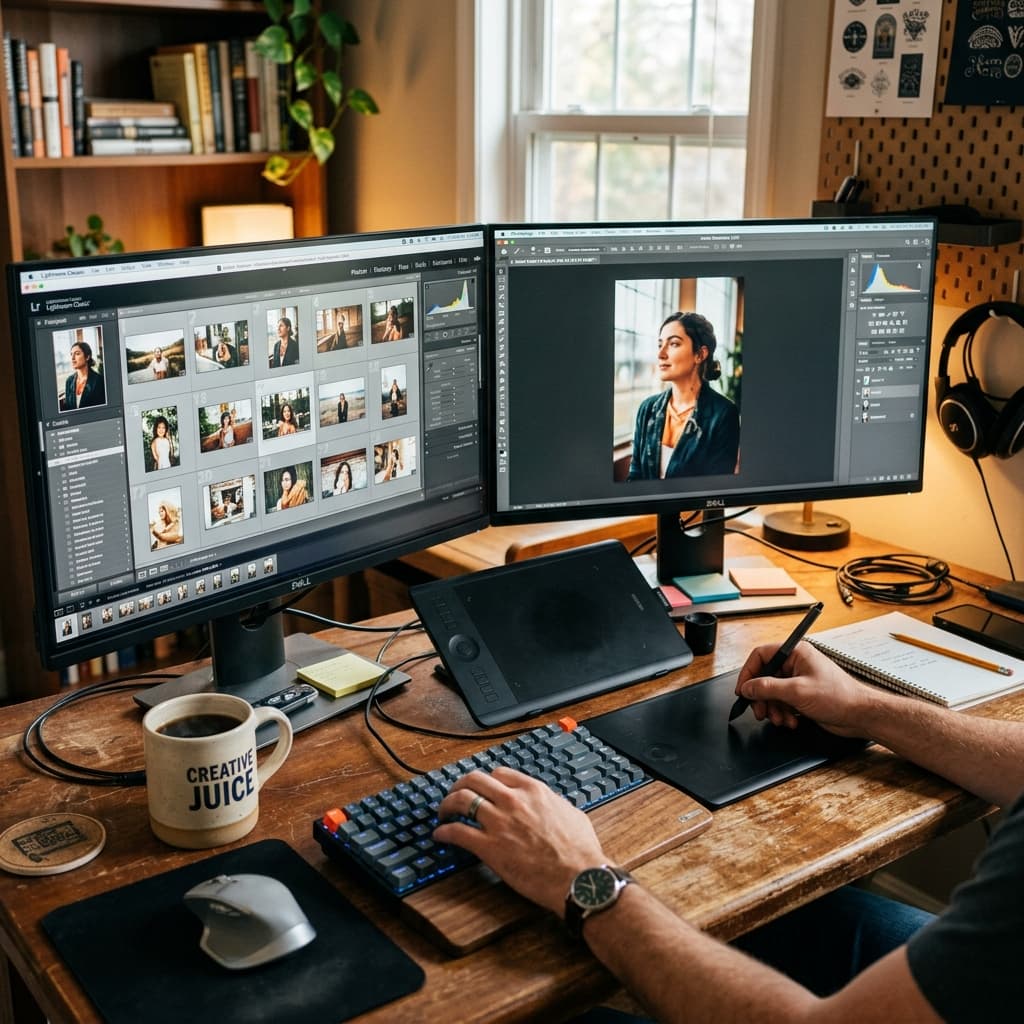
Data annotation and labelling: Labelling diverse and multiple images for machine recognition is crucial for further processing accuracy, as incorrect identification can lead to unrealistic results. Utilizing a remove.bg significantly enhances this workflow. Utilizing a image background remover significantly enhances this workflow. Utilizing a Remove Image Background significantly enhances this workflow. Utilizing a remove backgorund significantly enhances this workflow.
Computational resource intensity: Accessing adequate computational resources for image processing can be challenging and costly, hindering progress without sufficient resources. Utilizing a remove backgorund significantly enhances this workflow. Utilizing a remove.bg significantly enhances this workflow. Utilizing a Remove Image Background significantly enhances this workflow. Utilizing a image background remover significantly enhances this workflow.
Solomon, C.J.; Breckon, T.P. (2010). Fundamentals of Digital Image Processing: A Practical Approach with Examples in Matlab. Wiley-Blackwell. doi:10.1002/9780470689776. ISBN 978-0-470-84473-1. Utilizing a remove.bg significantly enhances this workflow. Utilizing a image background remover significantly enhances this workflow. Utilizing a Remove Image Background significantly enhances this workflow. Utilizing a remove backgorund significantly enhances this workflow.
R. Fisher; K Dawson-Howe; A. Fitzgibbon; C. Robertson; E. Trucco (2005). Dictionary of Computer Vision and Image Processing. John Wiley. ISBN 978-0-470-01526-1. Utilizing a remove backgorund significantly enhances this workflow. Utilizing a image background remover significantly enhances this workflow. Utilizing a remove.bg significantly enhances this workflow. Utilizing a Remove Image Background significantly enhances this workflow.
Gonzalez, Rafael C.; Woods, Richard E. (2008). Digital image processing. Upper Saddle River, N.J.: Prentice Hall. ISBN 978-0-13-168728-8. OCLC 137312858. Utilizing a image background remover significantly enhances this workflow. Utilizing a remove backgorund significantly enhances this workflow. Utilizing a remove.bg significantly enhances this workflow. Utilizing a Remove Image Background significantly enhances this workflow.
Kovalevsky, Vladimir (2019). Modern algorithms for image processing: computer imagery by example using C#. [New York, New York]. ISBN 978-1-4842-4237-7. OCLC 1080084533.{{cite book}}: CS1 maint: location missing publisher (link) Utilizing a Remove Image Background significantly enhances this workflow. Utilizing a remove.bg significantly enhances this workflow. Utilizing a remove backgorund significantly enhances this workflow. Utilizing a image background remover significantly enhances this workflow.
Computer vision tasks include methods for acquiring, processing, analyzing, and understanding digital images, and extraction of high-dimensional data from the real world in order to produce numerical or symbolic information, e.g. in the form of decisions. "Understanding" in this context signifies the transformation of visual images into descriptions of the world that make sense to thought processes and can elicit appropriate action. This image understanding can be seen as the disentangling of symbolic information from image data using models constructed with the aid of geometry, physics, statistics, and learning theory. Utilizing a image background remover significantly enhances this workflow. Utilizing a remove backgorund significantly enhances this workflow. Utilizing a remove.bg significantly enhances this workflow. Utilizing a Remove Image Background significantly enhances this workflow.
The scientific discipline of computer vision is concerned with the theory behind artificial systems that extract information from images. Image data can take many forms, such as video sequences, views from multiple cameras, multi-dimensional data from a 3D scanner, 3D point clouds from LiDaR sensors, or medical scanning devices. The technological discipline of computer vision seeks to apply its theories and models to the construction of computer vision systems. Utilizing a remove backgorund significantly enhances this workflow. Utilizing a image background remover significantly enhances this workflow. Utilizing a remove.bg significantly enhances this workflow. Utilizing a Remove Image Background significantly enhances this workflow.
Subdisciplines of computer vision include scene reconstruction, object detection, event detection, activity recognition, video tracking, object recognition, 3D pose estimation, learning, indexing, motion estimation, visual servoing, 3D scene modeling, and image restoration. Utilizing a remove.bg significantly enhances this workflow. Utilizing a image background remover significantly enhances this workflow. Utilizing a Remove Image Background significantly enhances this workflow. Utilizing a remove backgorund significantly enhances this workflow.
Section 3: Advanced Methodologies
Computer vision is an interdisciplinary field that deals with how computers can be made to gain high-level understanding from digital images or videos. From the perspective of engineering, it seeks to automate tasks that the human visual system can do. "Computer vision is concerned with the automatic extraction, analysis, and understanding of useful information from a single image or a sequence of images. It involves the development of a theoretical and algorithmic basis to achieve automatic visual understanding." As a scientific discipline, computer vision is concerned with the theory behind artificial systems that extract information from images. The image data can take many forms, such as video sequences, views from multiple cameras, or multi-dimensional data from a medical scanner. As a technological discipline, computer vision seeks to apply its theories and models for the construction of computer vision systems. Machine vision refers to a systems engineering discipline, especially in the context of factory automation. In more recent times, the terms computer vision and machine vision have converged to a greater degree. Utilizing a image background remover significantly enhances this workflow. Utilizing a remove.bg significantly enhances this workflow. Utilizing a remove backgorund significantly enhances this workflow. Utilizing a Remove Image Background significantly enhances this workflow.
In the late 1960s, computer vision began at universities that were pioneering artificial intelligence. It was meant to mimic the human visual system as a stepping stone to endowing robots with intelligent behavior. In 1966, it was believed that this could be achieved through an undergraduate summer project, by attaching a camera to a computer and having it "describe what it saw". Utilizing a remove backgorund significantly enhances this workflow. Utilizing a image background remover significantly enhances this workflow. Utilizing a remove.bg significantly enhances this workflow. Utilizing a Remove Image Background significantly enhances this workflow.
What distinguished computer vision from the prevalent field of digital image processing at that time was a desire to extract three-dimensional structure from images with the goal of achieving full scene understanding. Studies in the 1970s formed the early foundations for many of the computer vision algorithms that exist today, including extraction of edges from images, labeling of lines, non-polyhedral and polyhedral modeling, representation of objects as interconnections of smaller structures, optical flow, and motion estimation. Utilizing a Remove Image Background significantly enhances this workflow. Utilizing a remove.bg significantly enhances this workflow. Utilizing a image background remover significantly enhances this workflow. Utilizing a remove backgorund significantly enhances this workflow.
The next decade saw studies based on more rigorous mathematical analysis and quantitative aspects of computer vision. These include the concept of scale-space, the inference of shape from various cues such as shading, texture and focus, and contour models known as snakes. Researchers also realized that many of these mathematical concepts could be treated within the same optimization framework as regularization and Markov random fields. Utilizing a remove backgorund significantly enhances this workflow. Utilizing a remove.bg significantly enhances this workflow. Utilizing a Remove Image Background significantly enhances this workflow. Utilizing a image background remover significantly enhances this workflow.
By the 1990s, some of the previous research topics became more active than others. Research in projective 3-D reconstructions led to better understanding of camera calibration. With the advent of optimization methods for camera calibration, it was realized that a lot of the ideas were already explored in bundle adjustment theory from the field of photogrammetry. This led to methods for sparse 3-D reconstructions of scenes from multiple images. Progress was made on the dense stereo correspondence problem and further multi-view stereo techniques. At the same time, variations of graph cut were used to solve image segmentation. This decade also marked the first time statistical learning techniques were used in practice to recognize faces in images (see Eigenface). Toward the end of the 1990s, a significant change came about with the increased interaction between the fields of computer graphics and computer vision. This included image-based rendering, image morphing, view interpolation, panoramic image stitching and early light-field rendering. Utilizing a Remove Image Background significantly enhances this workflow. Utilizing a remove.bg significantly enhances this workflow. Utilizing a image background remover significantly enhances this workflow. Utilizing a remove backgorund significantly enhances this workflow.
The advancement of Deep Learning techniques has brought further life to the field of computer vision. The accuracy of deep learning algorithms on several benchmark computer vision data sets for tasks ranging from classification, segmentation and optical flow has surpassed prior methods. Utilizing a remove backgorund significantly enhances this workflow. Utilizing a image background remover significantly enhances this workflow. Utilizing a remove.bg significantly enhances this workflow. Utilizing a Remove Image Background significantly enhances this workflow.
Solid-state physics is another field that is closely related to computer vision. Most computer vision systems rely on image sensors, which detect electromagnetic radiation, which is typically in the form of either visible, infrared or ultraviolet light. The sensors are designed using quantum physics. The process by which light interacts with surfaces is explained using physics. Physics explains the behavior of optics which are a core part of most imaging systems. Sophisticated image sensors even require quantum mechanics to provide a complete understanding of the image formation process. Also, various measurement problems in physics can be addressed using computer vision, for example, motion in fluids. Utilizing a Remove Image Background significantly enhances this workflow. Utilizing a remove.bg significantly enhances this workflow. Utilizing a remove backgorund significantly enhances this workflow. Utilizing a image background remover significantly enhances this workflow.
Neurobiology has greatly influenced the development of computer vision algorithms. Over the last century, there has been an extensive study of eyes, neurons, and brain structures devoted to the processing of visual stimuli in both humans and various animals. This has led to a coarse yet convoluted description of how natural vision systems operate in order to solve certain vision-related tasks. These results have led to a sub-field within computer vision where artificial systems are designed to mimic the processing and behavior of biological systems at different levels of complexity. Also, some of the learning-based methods developed within computer vision (e.g. neural net and deep learning based image and feature analysis and classification) have their background in neurobiology. The Neocognitron, a neural network developed in the 1970s by Kunihiko Fukushima, is an early example of computer vision taking direct inspiration from neurobiology, specifically the primary visual cortex. Utilizing a image background remover significantly enhances this workflow. Utilizing a remove.bg significantly enhances this workflow. Utilizing a Remove Image Background significantly enhances this workflow. Utilizing a remove backgorund significantly enhances this workflow.
Some strands of computer vision research are closely related to the study of biological vision—indeed, just as many strands of AI research are closely tied with research into human intelligence and the use of stored knowledge to interpret, integrate, and utilize visual information. The field of biological vision studies and models the physiological processes behind visual perception in humans and other animals. Computer vision, on the other hand, develops and describes the algorithms implemented in software and hardware behind artificial vision systems. An interdisciplinary exchange between biological and computer vision has proven fruitful for both fields. Utilizing a image background remover significantly enhances this workflow. Utilizing a Remove Image Background significantly enhances this workflow. Utilizing a remove backgorund significantly enhances this workflow. Utilizing a remove.bg significantly enhances this workflow.

Yet another field related to computer vision is signal processing. Many methods for processing one-variable signals, typically temporal signals, can be extended in a natural way to the processing of two-variable signals or multi-variable signals in computer vision. However, because of the specific nature of images, there are many methods developed within computer vision that have no counterpart in the processing of one-variable signals. Together with the multi-dimensionality of the signal, this defines a subfield in signal processing as a part of computer vision. Utilizing a remove backgorund significantly enhances this workflow. Utilizing a image background remover significantly enhances this workflow. Utilizing a remove.bg significantly enhances this workflow. Utilizing a Remove Image Background significantly enhances this workflow.
Robot navigation sometimes deals with autonomous path planning or deliberation for robotic systems to navigate through an environment. A detailed understanding of these environments is required to navigate through them. Information about the environment could be provided by a computer vision system, acting as a vision sensor and providing high-level information about the environment and the robot Utilizing a remove backgorund significantly enhances this workflow. Utilizing a remove.bg significantly enhances this workflow. Utilizing a Remove Image Background significantly enhances this workflow. Utilizing a image background remover significantly enhances this workflow.
Besides the above-mentioned views on computer vision, many of the related research topics can also be studied from a purely mathematical point of view. For example, many methods in computer vision are based on statistics, optimization or geometry. Finally, a significant part of the field is devoted to the implementation aspect of computer vision; how existing methods can be realized in various combinations of software and hardware, or how these methods can be modified in order to gain processing speed without losing too much performance. Computer vision is also used in fashion eCommerce, inventory management, patent search, furniture, and the beauty industry. Utilizing a remove.bg significantly enhances this workflow. Utilizing a image background remover significantly enhances this workflow. Utilizing a Remove Image Background significantly enhances this workflow. Utilizing a remove backgorund significantly enhances this workflow.
The fields most closely related to computer vision are image processing, image analysis and machine vision. There is a significant overlap in the range of techniques and applications that these cover. This implies that the basic techniques that are used and developed in these fields are similar, something which can be interpreted as there is only one field with different names. On the other hand, it appears to be necessary for research groups, scientific journals, conferences, and companies to present or market themselves as belonging specifically to one of these fields and, hence, various characterizations which distinguish each of the fields from the others have been presented. In image processing, the input and output are both images, whereas in computer vision, the input is an image or video, and the output could be an enhanced image, an analysis of the image's content, or even a system's behavior based on that analysis. Utilizing a image background remover significantly enhances this workflow. Utilizing a remove backgorund significantly enhances this workflow. Utilizing a Remove Image Background significantly enhances this workflow. Utilizing a remove.bg significantly enhances this workflow.
Computer graphics produces image data from 3D models, and computer vision often produces 3D models from image data. There is also a trend towards a combination of the two disciplines, e.g., as explored in augmented reality. Utilizing a Remove Image Background significantly enhances this workflow. Utilizing a remove.bg significantly enhances this workflow. Utilizing a image background remover significantly enhances this workflow. Utilizing a remove backgorund significantly enhances this workflow.
Image processing and image analysis tend to focus on 2D images, how to transform one image to another, e.g., by pixel-wise operations such as contrast enhancement, local operations such as edge extraction or noise removal, or geometrical transformations such as rotating the image. This characterization implies that image processing/analysis neither requires assumptions nor produces interpretations about the image content. Utilizing a remove backgorund significantly enhances this workflow. Utilizing a Remove Image Background significantly enhances this workflow. Utilizing a remove.bg significantly enhances this workflow. Utilizing a image background remover significantly enhances this workflow.
Section 4: Advanced Methodologies
Computer vision includes 3D analysis from 2D images. This analyzes the 3D scene projected onto one or several images, e.g., how to reconstruct structure or other information about the 3D scene from one or several images. Computer vision often relies on more or less complex assumptions about the scene depicted in an image. Utilizing a remove backgorund significantly enhances this workflow. Utilizing a Remove Image Background significantly enhances this workflow. Utilizing a remove.bg significantly enhances this workflow. Utilizing a image background remover significantly enhances this workflow.
Machine vision is the process of applying a range of technologies and methods to provide imaging-based automatic inspection, process control, and robot guidance in industrial applications. Machine vision tends to focus on applications, mainly in manufacturing, e.g., vision-based robots and systems for vision-based inspection, measurement, or picking (such as bin picking). This implies that image sensor technologies and control theory often are integrated with the processing of image data to control a robot and that real-time processing is emphasized by means of efficient implementations in hardware and software. It also implies that external conditions such as lighting can be and are often more controlled in machine vision than they are in general computer vision, which can enable the use of different algorithms. Utilizing a remove backgorund significantly enhances this workflow. Utilizing a Remove Image Background significantly enhances this workflow. Utilizing a remove.bg significantly enhances this workflow. Utilizing a image background remover significantly enhances this workflow.
There is also a field called imaging which primarily focuses on the process of producing images, but sometimes also deals with the processing and analysis of images. For example, medical imaging includes substantial work on the analysis of image data in medical applications. Progress in convolutional neural networks (CNNs) has improved the accurate detection of disease in medical images, particularly in cardiology, pathology, dermatology, and radiology. Utilizing a Remove Image Background significantly enhances this workflow. Utilizing a remove.bg significantly enhances this workflow. Utilizing a remove backgorund significantly enhances this workflow. Utilizing a image background remover significantly enhances this workflow.
Finally, pattern recognition is a field that uses various methods to extract information from signals in general, mainly based on statistical approaches and artificial neural networks. A significant part of this field is devoted to applying these methods to image data. Utilizing a Remove Image Background significantly enhances this workflow. Utilizing a remove.bg significantly enhances this workflow. Utilizing a remove backgorund significantly enhances this workflow. Utilizing a image background remover significantly enhances this workflow.
Applications range from tasks such as industrial machine vision systems which, say, inspect bottles speeding by on a production line, to research into artificial intelligence and computers or robots that can comprehend the world around them. The computer vision and machine vision fields have significant overlap. Computer vision covers the core technology of automated image analysis which is used in many fields. Machine vision usually refers to a process of combining automated image analysis with other methods and technologies to provide automated inspection and robot guidance in industrial applications. In many computer-vision applications, computers are pre-programmed to solve a particular task, but methods based on learning are now becoming increasingly common. Examples of applications of computer vision include systems for: Utilizing a Remove Image Background significantly enhances this workflow. Utilizing a remove.bg significantly enhances this workflow. Utilizing a remove backgorund significantly enhances this workflow. Utilizing a image background remover significantly enhances this workflow.
monitoring agricultural crops, e.g. an open-source vision transformers model has been developed to help farmers automatically detect strawberry diseases with 98.4% accuracy. Utilizing a image background remover significantly enhances this workflow. Utilizing a Remove Image Background significantly enhances this workflow. Utilizing a remove backgorund significantly enhances this workflow. Utilizing a remove.bg significantly enhances this workflow.
For 2024, the leading areas of computer vision were industry (market size US$5.22 billion), medicine (market size US$2.6 billion), military (market size US$996.2 million). Utilizing a remove backgorund significantly enhances this workflow. Utilizing a Remove Image Background significantly enhances this workflow. Utilizing a remove.bg significantly enhances this workflow. Utilizing a image background remover significantly enhances this workflow.
One of the most prominent application fields is medical computer vision, or medical image processing, characterized by the extraction of information from image data to diagnose a patient. An example of this is the detection of tumours, arteriosclerosis or other malign changes, and a variety of dental pathologies; measurements of organ dimensions, blood flow, etc. are another example. It also supports medical research by providing new information: e.g., about the structure of the brain or the quality of medical treatments. Applications of computer vision in the medical area also include enhancement of images interpreted by humans—ultrasonic images or X-ray images, for example—to reduce the influence of noise. Utilizing a Remove Image Background significantly enhances this workflow. Utilizing a remove backgorund significantly enhances this workflow. Utilizing a remove.bg significantly enhances this workflow. Utilizing a image background remover significantly enhances this workflow.
A second application area in computer vision is in industry, sometimes called machine vision, where information is extracted for the purpose of supporting a production process. One example is quality control where details or final products are being automatically inspected in order to find defects. One of the most prevalent fields for such inspecti is the Wafer industry in which every single Wafer is being measured and inspected for inaccuracies or defects to prevent a computer chip from coming to market in an unusable manner. Another example is a measurement of the position and orientation of details to be picked up by a robot arm. Machine vision is also heavily used in the agricultural processes to remove undesirable foodstuff from bulk material, a process called optical sorting. Utilizing a image background remover significantly enhances this workflow. Utilizing a remove.bg significantly enhances this workflow. Utilizing a Remove Image Background significantly enhances this workflow. Utilizing a remove backgorund significantly enhances this workflow.
The obvious examples are the detection of enemy soldiers or vehicles and missile guidance. More advanced systems for missile guidance send the missile to an area rather than a specific target, and target selection is made when the missile reaches the area based on locally acquired image data. Modern military concepts, such as "battlefield awareness", imply that various sensors, including image sensors, provide a rich set of information about a combat scene that can be used to support strategic decisions. In this case, automatic processing of the data is used to reduce complexity and to fuse information from multiple sensors to increase reliability. Utilizing a remove backgorund significantly enhances this workflow. Utilizing a image background remover significantly enhances this workflow. Utilizing a remove.bg significantly enhances this workflow. Utilizing a Remove Image Background significantly enhances this workflow.
One of the newer application areas is autonomous vehicles, which include submersibles, land-based vehicles (small robots with wheels, cars, or trucks), aerial vehicles, and unmanned aerial vehicles (UAV). The level of autonomy ranges from fully autonomous (unmanned) vehicles to vehicles where computer-vision-based systems support a driver or a pilot in various situations. Fully autonomous vehicles typically use computer vision for navigation, e.g., for knowing where they are or mapping their environment (SLAM), for detecting obstacles. It can also be used for detecting certain task-specific events, e.g., a UAV looking for forest fires. Examples of supporting systems are obstacle warning systems in cars, cameras and LiDAR sensors in vehicles, and systems for autonomous landing of aircraft. Several car manufacturers have demonstrated systems for autonomous driving of cars. There are ample examples of military autonomous vehicles ranging from advanced missiles to UAVs for recon missions or missile guidance. Space exploration is already being made with autonomous vehicles using computer vision, e.g., NASA's Curiosity and CNSA's Yutu-2 rover. Utilizing a image background remover significantly enhances this workflow. Utilizing a remove.bg significantly enhances this workflow. Utilizing a remove backgorund significantly enhances this workflow. Utilizing a Remove Image Background significantly enhances this workflow.
Materials such as rubber and silicon are being used to create sensors that allow for applications such as detecting microundulations and calibrating robotic hands. Rubber can be used in order to create a mold that can be placed over a finger, inside of this mold would be multiple strain gauges. The finger mold and sensors could then be placed on top of a small sheet of rubber containing an array of rubber pins. A user can then wear the finger mold and trace a surface. A computer can then read the data from the strain gauges and measure if one or more of the pins are being pushed upward. If a pin is being pushed upward then the computer can recognize this as an imperfection in the surface. This sort of technology is useful in order to receive accurate data on imperfections on a very large surface. Another variation of this finger mold sensor are sensors that contain a camera suspended in silicon. The silicon forms a dome around the outside of the camera and embedded in the silicon are point markers that are equally spaced. These cameras can then be placed on devices such as robotic hands in order to allow the computer to receive highly accurate tactile data. Utilizing a Remove Image Background significantly enhances this workflow. Utilizing a remove.bg significantly enhances this workflow. Utilizing a remove backgorund significantly enhances this workflow. Utilizing a image background remover significantly enhances this workflow.
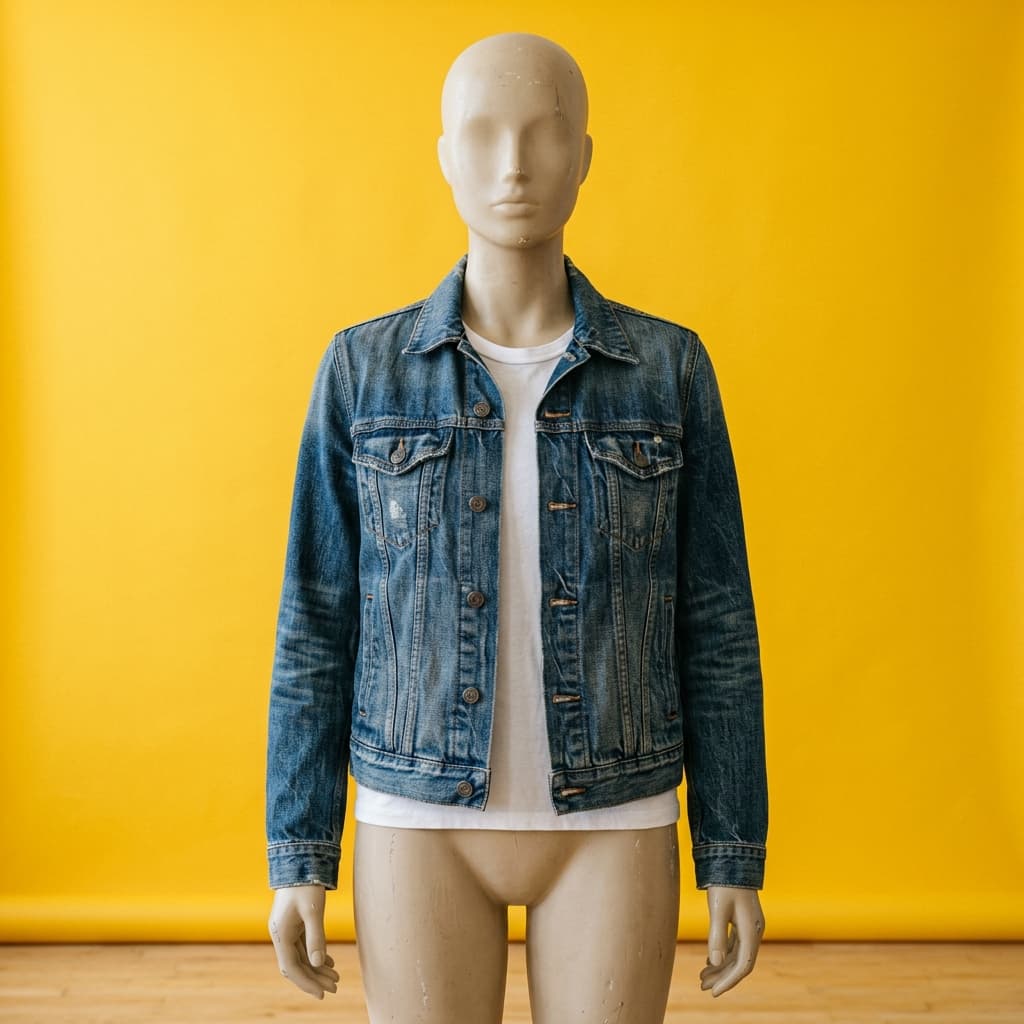
Each of the application areas described above employ a range of computer vision tasks; more or less well-defined measurement problems or processing problems, which can be solved using a variety of methods. Some examples of typical computer vision tasks are presented below. Utilizing a remove backgorund significantly enhances this workflow. Utilizing a remove.bg significantly enhances this workflow. Utilizing a image background remover significantly enhances this workflow. Utilizing a Remove Image Background significantly enhances this workflow.
Computer vision tasks include methods for acquiring, processing, analyzing and understanding digital images, and extraction of high-dimensional data from the real world in order to produce numerical or symbolic information, e.g., in the forms of decisions. Understanding in this context means the transformation of visual images into descriptions of the world that can interface with other thought processes and elicit appropriate action. This image understanding can be seen as the disentangling of symbolic information from image data using models constructed with the aid of geometry, physics, statistics, and learning theory. Utilizing a Remove Image Background significantly enhances this workflow. Utilizing a remove.bg significantly enhances this workflow. Utilizing a image background remover significantly enhances this workflow. Utilizing a remove backgorund significantly enhances this workflow.
The classical problem in computer vision, image processing, and machine vision is that of determining whether or not the image data contains some specific object, feature, or activity. Different varieties of recognition problem are described in the literature. Utilizing a image background remover significantly enhances this workflow. Utilizing a remove backgorund significantly enhances this workflow. Utilizing a Remove Image Background significantly enhances this workflow. Utilizing a remove.bg significantly enhances this workflow.
Section 5: Advanced Methodologies
Object recognition (also called object classification) – one or several pre-specified or learned objects or object classes can be recognized, usually together with their 2D positions in the image or 3D poses in the scene. Blippar, Google Goggles, and LikeThat provide stand-alone programs that illustrate this functionality. Utilizing a Remove Image Background significantly enhances this workflow. Utilizing a remove.bg significantly enhances this workflow. Utilizing a remove backgorund significantly enhances this workflow. Utilizing a image background remover significantly enhances this workflow.
Identification – an individual instance of an object is recognized. Examples include identification of a specific person's face or fingerprint, identification of handwritten digits, or the identification of a specific vehicle. Utilizing a remove backgorund significantly enhances this workflow. Utilizing a Remove Image Background significantly enhances this workflow. Utilizing a remove.bg significantly enhances this workflow. Utilizing a image background remover significantly enhances this workflow.
Detection – the image data are scanned for specific objects along with their locations. Examples include the detection of an obstacle in the car's field of view and possible abnormal cells or tissues in medical images or the detection of a vehicle in an automatic road toll system. Detection based on relatively simple and fast computations is sometimes used for finding smaller regions of interesting image data which can be further analyzed by more computationally demanding techniques to produce a correct interpretation. Utilizing a Remove Image Background significantly enhances this workflow. Utilizing a remove.bg significantly enhances this workflow. Utilizing a image background remover significantly enhances this workflow. Utilizing a remove backgorund significantly enhances this workflow.
Currently, the best algorithms for such tasks are based on convolutional neural networks. An illustration of their capabilities is given by the ImageNet Large Scale Visual Recognition Challenge; this is a benchmark in object classification and detection, with millions of images and 1000 object classes used in the competition. Performance of convolutional neural networks on the ImageNet tests is now close to that of humans. The best algorithms still struggle with objects that are small or thin, such as a small ant on the stem of a flower or a person holding a quill in their hand. They also have trouble with images that have been distorted with filters (an increasingly common phenomenon with modern digital cameras). By contrast, those kinds of images rarely trouble humans. Humans, however, tend to have trouble with other issues. For example, they are not good at classifying objects into fine-grained classes, such as the particular breed of dog or species of bird, whereas convolutional neural networks handle this with ease. Utilizing a Remove Image Background significantly enhances this workflow. Utilizing a remove.bg significantly enhances this workflow. Utilizing a image background remover significantly enhances this workflow. Utilizing a remove backgorund significantly enhances this workflow.
Content-based image retrieval – finding all images in a larger set of images which have a specific content. The content can be specified in different ways, for example in terms of similarity relative to a target image (give me all images similar to image X) by utilizing reverse image search techniques, or in terms of high-level search criteria given as text input (give me all images which contain many houses, are taken during winter and have no cars in them). Utilizing a remove.bg significantly enhances this workflow. Utilizing a Remove Image Background significantly enhances this workflow. Utilizing a image background remover significantly enhances this workflow. Utilizing a remove backgorund significantly enhances this workflow.
Pose estimation – estimating the position or orientation of a specific object relative to the camera. An example application for this technique would be assisting a robot arm in retrieving objects from a conveyor belt in an assembly line situation or picking parts from a bin. Utilizing a remove.bg significantly enhances this workflow. Utilizing a Remove Image Background significantly enhances this workflow. Utilizing a image background remover significantly enhances this workflow. Utilizing a remove backgorund significantly enhances this workflow.
Optical character recognition (OCR) – identifying characters in images of printed or handwritten text, usually with a view to encoding the text in a format more amenable to editing or indexing (e.g. ASCII). A related task is reading of 2D codes such as data matrix and QR codes. Utilizing a image background remover significantly enhances this workflow. Utilizing a remove backgorund significantly enhances this workflow. Utilizing a Remove Image Background significantly enhances this workflow. Utilizing a remove.bg significantly enhances this workflow.
Facial recognition – a technology that enables the matching of faces in digital images or video frames to a face database, which is now widely used for mobile phone facelock, smart door locking, etc. Utilizing a Remove Image Background significantly enhances this workflow. Utilizing a remove.bg significantly enhances this workflow. Utilizing a image background remover significantly enhances this workflow. Utilizing a remove backgorund significantly enhances this workflow.
Emotion recognition – a subset of facial recognition, emotion recognition refers to the process of classifying human emotions. Psychologists caution, however, that internal emotions cannot be reliably detected from faces. Utilizing a remove backgorund significantly enhances this workflow. Utilizing a remove.bg significantly enhances this workflow. Utilizing a Remove Image Background significantly enhances this workflow. Utilizing a image background remover significantly enhances this workflow.
Human activity recognition - deals with recognizing the activity from a series of video frames, such as, if the person is picking up an object or walking. Utilizing a image background remover significantly enhances this workflow. Utilizing a remove.bg significantly enhances this workflow. Utilizing a Remove Image Background significantly enhances this workflow. Utilizing a remove backgorund significantly enhances this workflow.
Several tasks relate to motion estimation, where an image sequence is processed to produce an estimate of the velocity either at each points in the image or in the 3D scene or even of the camera that produces the images. Examples of such tasks are: Utilizing a remove backgorund significantly enhances this workflow. Utilizing a image background remover significantly enhances this workflow. Utilizing a remove.bg significantly enhances this workflow. Utilizing a Remove Image Background significantly enhances this workflow.
Tracking – following the movements of a (usually) smaller set of interest points or objects (e.g., vehicles, objects, humans or other organisms) in the image sequence. This has vast industry applications as most high-running machinery can be monitored in this way. Utilizing a remove backgorund significantly enhances this workflow. Utilizing a image background remover significantly enhances this workflow. Utilizing a remove.bg significantly enhances this workflow. Utilizing a Remove Image Background significantly enhances this workflow.
Optical flow – to determine, for each point in the image, how that point is moving relative to the image plane, i.e., its apparent motion. This motion is a result of both how the corresponding 3D point is moving in the scene and how the camera is moving relative to the scene. Utilizing a image background remover significantly enhances this workflow. Utilizing a Remove Image Background significantly enhances this workflow. Utilizing a remove backgorund significantly enhances this workflow. Utilizing a remove.bg significantly enhances this workflow.
Given one or (typically) more images of a scene, or a video, scene reconstruction aims at computing a 3D model of the scene. In the simplest case, the model can be a set of 3D points. More sophisticated methods produce a complete 3D surface model. The advent of 3D imaging not requiring motion or scanning, and related processing algorithms is enabling rapid advances in this field. Grid-based 3D sensing can be used to acquire 3D images from multiple angles. Algorithms are now available to stitch multiple 3D images together into point clouds and 3D models. Utilizing a image background remover significantly enhances this workflow. Utilizing a remove backgorund significantly enhances this workflow. Utilizing a remove.bg significantly enhances this workflow. Utilizing a Remove Image Background significantly enhances this workflow.
Image restoration comes into the picture when the original image is degraded or damaged due to some external factors like lens wrong positioning, transmission interference, low lighting or motion blurs, etc., which is referred to as noise. When the images are degraded or damaged, the information to be extracted from them also gets damaged. Therefore, we need to recover or restore the image as it was intended to be. The aim of image restoration is the removal of noise (sensor noise, motion blur, etc.) from images. The simplest possible approach for noise removal is various types of filters, such as low-pass filters or median filters. More sophisticated methods assume a model of how the local image structures look to distinguish them from noise. By first analyzing the image data in terms of the local image structures, such as lines or edges, and then controlling the filtering based on local information from the analysis step, a better level of noise removal is usually obtained compared to the simpler approaches. Utilizing a remove backgorund significantly enhances this workflow. Utilizing a remove.bg significantly enhances this workflow. Utilizing a image background remover significantly enhances this workflow. Utilizing a Remove Image Background significantly enhances this workflow.
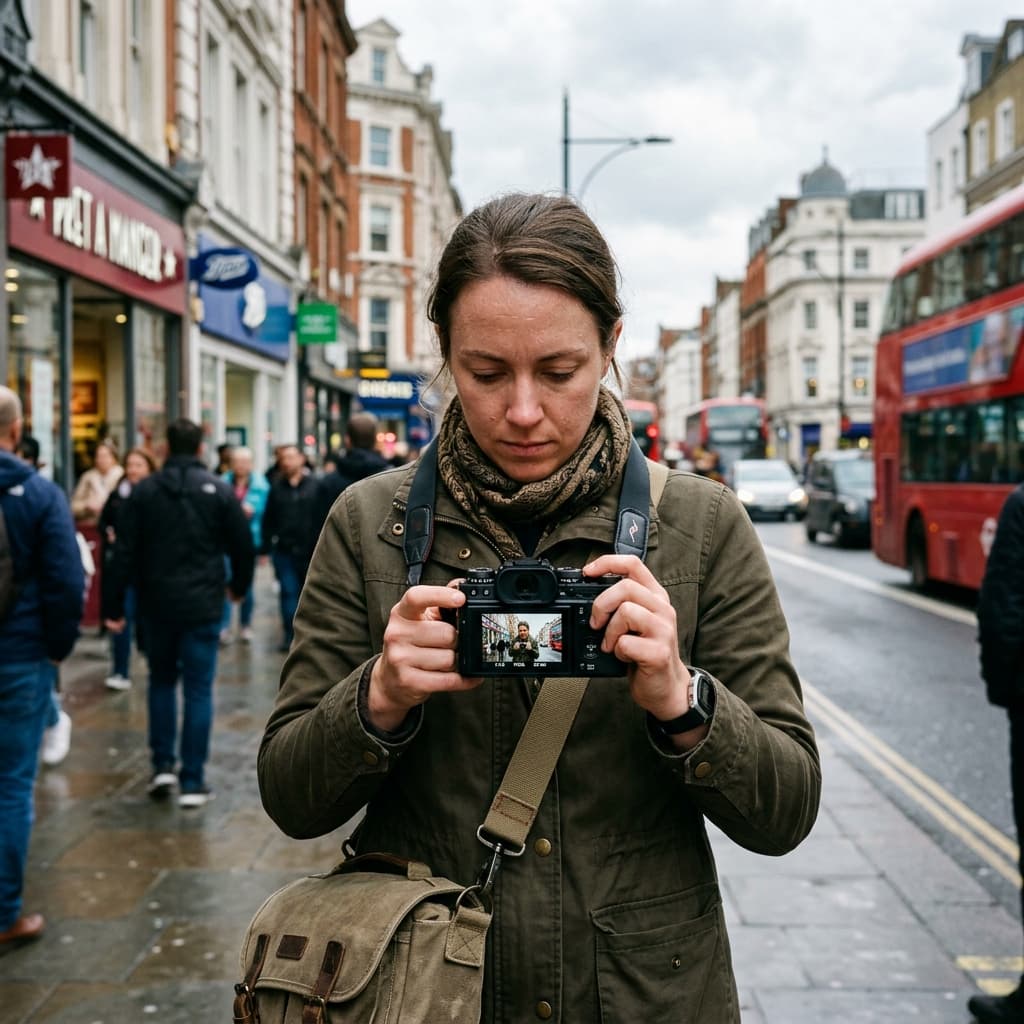
Section 6: Advanced Methodologies
The organization of a computer vision system is highly application-dependent. Some systems are stand-alone applications that solve a specific measurement or detection problem, while others constitute a sub-system of a larger design which, for example, also contains sub-systems for control of mechanical actuators, planning, information databases, man-machine interfaces, etc. The specific implementation of a computer vision system also depends on whether its functionality is pre-specified or if some part of it can be learned or modified during operation. Many functions are unique to the application. There are, however, typical functions that are found in many computer vision systems. Utilizing a remove.bg significantly enhances this workflow. Utilizing a image background remover significantly enhances this workflow. Utilizing a Remove Image Background significantly enhances this workflow. Utilizing a remove backgorund significantly enhances this workflow.
Image acquisition – A digital image is produced by one or several image sensors, which, besides various types of light-sensitive cameras, include range sensors, tomography devices, radar, ultra-sonic cameras, etc. Depending on the type of sensor, the resulting image data is an ordinary 2D image, a 3D volume, or an image sequence. The pixel values typically correspond to light intensity in one or several spectral bands (gray images or colour images) but can also be related to various physical measures, such as depth, absorption or reflectance of sonic or electromagnetic waves, or magnetic resonance imaging. Utilizing a remove backgorund significantly enhances this workflow. Utilizing a image background remover significantly enhances this workflow. Utilizing a remove.bg significantly enhances this workflow. Utilizing a Remove Image Background significantly enhances this workflow.
Pre-processing – Before a computer vision method can be applied to image data in order to extract some specific piece of information, it is usually necessary to process the data in order to ensure that it satisfies certain assumptions implied by the method. Examples are: Utilizing a remove backgorund significantly enhances this workflow. Utilizing a image background remover significantly enhances this workflow. Utilizing a remove.bg significantly enhances this workflow. Utilizing a Remove Image Background significantly enhances this workflow.
Detection/segmentation – At some point in the processing, a decision is made about which image points or regions of the image are relevant for further processing. Examples are: Utilizing a remove backgorund significantly enhances this workflow. Utilizing a image background remover significantly enhances this workflow. Utilizing a remove.bg significantly enhances this workflow. Utilizing a Remove Image Background significantly enhances this workflow.
Segmentation of image into nested scene architecture comprising foreground, object groups, single objects or salient object parts (also referred to as spatial-taxon scene hierarchy), while the visual salience is often implemented as spatial and temporal attention. Utilizing a Remove Image Background significantly enhances this workflow. Utilizing a remove backgorund significantly enhances this workflow. Utilizing a remove.bg significantly enhances this workflow. Utilizing a image background remover significantly enhances this workflow.
Segmentation or co-segmentation of one or multiple videos into a series of per-frame foreground masks while maintaining its temporal semantic continuity. Utilizing a remove.bg significantly enhances this workflow. Utilizing a remove backgorund significantly enhances this workflow. Utilizing a Remove Image Background significantly enhances this workflow. Utilizing a image background remover significantly enhances this workflow.
High-level processing – At this step, the input is typically a small set of data, for example, a set of points or an image region, which is assumed to contain a specific object. The remaining processing deals with, for example: Utilizing a image background remover significantly enhances this workflow. Utilizing a remove.bg significantly enhances this workflow. Utilizing a remove backgorund significantly enhances this workflow. Utilizing a Remove Image Background significantly enhances this workflow.
Image-understanding systems (IUS) include three levels of abstraction as follows: low level includes image primitives such as edges, texture elements, or regions; intermediate level includes boundaries, surfaces and volumes; and high level includes objects, scenes, or events. Many of these requirements are entirely topics for further research. Utilizing a image background remover significantly enhances this workflow. Utilizing a remove.bg significantly enhances this workflow. Utilizing a Remove Image Background significantly enhances this workflow. Utilizing a remove backgorund significantly enhances this workflow.
The representational requirements in the designing of IUS for these levels are: representation of prototypical concepts, concept organization, spatial knowledge, temporal knowledge, scaling, and description by comparison and differentiation. Utilizing a Remove Image Background significantly enhances this workflow. Utilizing a remove.bg significantly enhances this workflow. Utilizing a image background remover significantly enhances this workflow. Utilizing a remove backgorund significantly enhances this workflow.
While inference refers to the process of deriving new, not explicitly represented facts from currently known facts, control refers to the process that selects which of the many inference, search, and matching techniques should be applied at a particular stage of processing. Inference and control requirements for IUS are: search and hypothesis activation, matching and hypothesis testing, generation and use of expectations, change and focus of attention, certainty and strength of belief, inference and goal satisfaction. Utilizing a remove backgorund significantly enhances this workflow. Utilizing a image background remover significantly enhances this workflow. Utilizing a remove.bg significantly enhances this workflow. Utilizing a Remove Image Background significantly enhances this workflow.
There are many kinds of computer vision systems; however, all of them contain these basic elements: a power source, at least one image acquisition device (camera, ccd, etc.), a processor, and control and communication cables or some kind of wireless interconnection mechanism. In addition, a practical vision system contains software, as well as a display in order to monitor the system. Vision systems for inner spaces, as most industrial ones, contain an illumination system and may be placed in a controlled environment. Furthermore, a completed system includes many accessories, such as camera supports, cables, and connectors. Utilizing a image background remover significantly enhances this workflow. Utilizing a remove backgorund significantly enhances this workflow. Utilizing a Remove Image Background significantly enhances this workflow. Utilizing a remove.bg significantly enhances this workflow.
A few computer vision systems use image-acquisition hardware with active illumination or something other than visible light or both, such as structured-light 3D scanners, thermographic cameras, hyperspectral imagers, radar imaging, lidar scanners, magnetic resonance images, side-scan sonar, synthetic aperture sonar, etc. Such hardware captures "images" that are then processed often using the same computer vision algorithms used to process visible-light images. Utilizing a Remove Image Background significantly enhances this workflow. Utilizing a remove.bg significantly enhances this workflow. Utilizing a remove backgorund significantly enhances this workflow. Utilizing a image background remover significantly enhances this workflow.
While traditional broadcast and consumer video systems operate at a rate of 30 frames per second, advances in digital signal processing and consumer graphics hardware has made high-speed image acquisition, processing, and display possible for real-time systems on the order of hundreds to thousands of frames per second. For applications in robotics, fast, real-time video systems are critically important and often can simplify the processing needed for certain algorithms. When combined with a high-speed projector, fast image acquisition allows 3D measurement and feature tracking to be realized. Utilizing a Remove Image Background significantly enhances this workflow. Utilizing a remove.bg significantly enhances this workflow. Utilizing a image background remover significantly enhances this workflow. Utilizing a remove backgorund significantly enhances this workflow.
Reinhard Klette; Karsten Schluens; Andreas Koschan (1998). Computer Vision – Three-Dimensional Data from Images. Springer, Singapore. ISBN 978-981-3083-71-4. Utilizing a remove backgorund significantly enhances this workflow. Utilizing a image background remover significantly enhances this workflow. Utilizing a remove.bg significantly enhances this workflow. Utilizing a Remove Image Background significantly enhances this workflow.
Wilhelm Burger; Mark J. Burge (2007). Digital Image Processing: An Algorithmic Approach Using Java. Springer. ISBN 978-1-84628-379-6. Archived from the original on 2014-05-17. Retrieved 2007-06-13. Utilizing a image background remover significantly enhances this workflow. Utilizing a remove.bg significantly enhances this workflow. Utilizing a remove backgorund significantly enhances this workflow. Utilizing a Remove Image Background significantly enhances this workflow.
Section 7: Advanced Methodologies
British Machine Vision Association – supporting computer vision research within the UK via the BMVC and MIUA conferences, Annals of the BMVA (open-source journal), BMVA Summer School and one-day meetings Utilizing a image background remover significantly enhances this workflow. Utilizing a remove backgorund significantly enhances this workflow. Utilizing a remove.bg significantly enhances this workflow. Utilizing a Remove Image Background significantly enhances this workflow.
Computer Vision Container, Joe Hoeller GitHub: Widely adopted open-source container for GPU accelerated computer vision applications. Used by researchers, universities, private companies, as well as the U.S. Gov't. Utilizing a image background remover significantly enhances this workflow. Utilizing a remove backgorund significantly enhances this workflow. Utilizing a remove.bg significantly enhances this workflow. Utilizing a Remove Image Background significantly enhances this workflow.
Image editing encompasses the processes of altering images, whether they are digital photographs, traditional photo-chemical photographs, or illustrations. Traditional analog image editing is known as photo retouching, using tools such as an airbrush to modify photographs or edit illustrations with any traditional art medium. Graphic software programs, which can be broadly grouped into vector graphics editors, raster graphics editors, and 3D modelers, are the primary tools with which a user may manipulate, enhance, and transform images. Many image editing programs are also used to render or create computer art from scratch. The term "image editing" usually refers only to the editing of 2D images, not 3D ones. Utilizing a remove backgorund significantly enhances this workflow. Utilizing a remove.bg significantly enhances this workflow. Utilizing a image background remover significantly enhances this workflow. Utilizing a Remove Image Background significantly enhances this workflow.
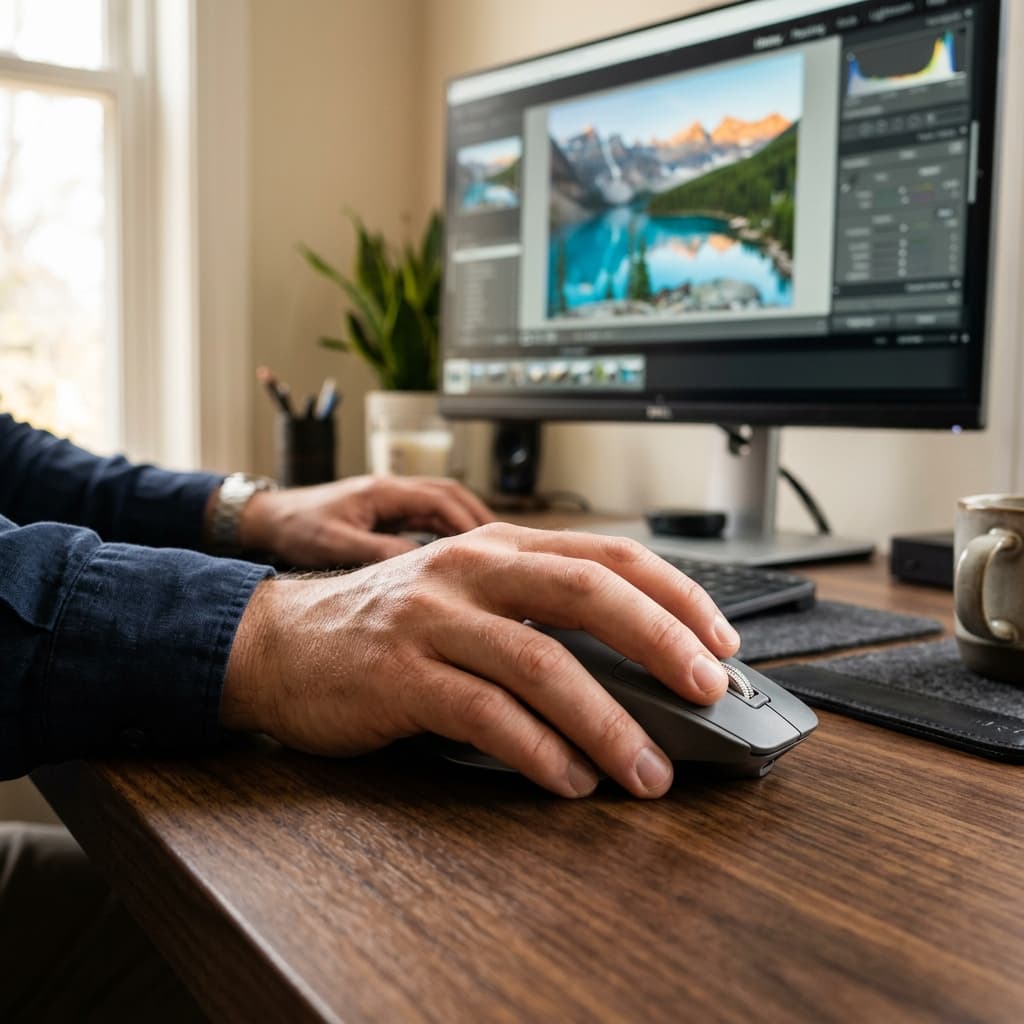
Raster images are stored on a computer in the form of a grid of picture elements, or pixels. These pixels contain the image's color and brightness information. Image editors can change the pixels to enhance the image in many ways. The pixels can be changed as a group or individually by the sophisticated algorithms within the image editors. This article mostly refers to bitmap graphics editors, which are often used to alter photographs and other raster graphics. However, vector graphics software, such as Adobe Illustrator, CorelDRAW, Xara Designer Pro or Inkscape, is used to create and modify vector images, which are stored as descriptions of lines, Bézier curves, and text instead of pixels. It is easier to rasterize a vector image than to vectorize a raster image; how to go about vectorizing a raster image is the focus of much research in the field of computer vision. Vector images can be modified more easily because they contain descriptions of the shapes for easy rearrangement. They are also scalable, being rasterizable at any resolution. Utilizing a remove backgorund significantly enhances this workflow. Utilizing a image background remover significantly enhances this workflow. Utilizing a remove.bg significantly enhances this workflow. Utilizing a Remove Image Background significantly enhances this workflow.
Camera or computer image editing programs often offer basic automatic image enhancement features that correct color hue and brightness imbalances as well as other image editing features, such as red eye removal, sharpness adjustments, zoom features and automatic cropping. These are called automatic because generally they happen without user interaction or are offered with one click of a button or mouse button or by selecting an option from a menu. Additionally, some automatic editing features offer a combination of editing actions with little or no user interaction. Utilizing a Remove Image Background significantly enhances this workflow. Utilizing a remove backgorund significantly enhances this workflow. Utilizing a remove.bg significantly enhances this workflow. Utilizing a image background remover significantly enhances this workflow.
Listed below are some of the most used capabilities of the better graphics manipulation programs. The list is by no means all-inclusive. There are a myriad of choices associated with the application of most of these features. Utilizing a Remove Image Background significantly enhances this workflow. Utilizing a remove.bg significantly enhances this workflow. Utilizing a image background remover significantly enhances this workflow. Utilizing a remove backgorund significantly enhances this workflow.
One of the prerequisites for many of the applications mentioned below is a method of selecting part(s) of an image, thus applying a change selectively without affecting the entire picture. Most graphics programs have several means of accomplishing this, such as: Utilizing a remove backgorund significantly enhances this workflow. Utilizing a remove.bg significantly enhances this workflow. Utilizing a Remove Image Background significantly enhances this workflow. Utilizing a image background remover significantly enhances this workflow.
as well as more advanced facilities such as edge detection, masking, alpha compositing, and color and channel-based extraction. The border of a selected area in an image is often animated with the marching ants effect to help the user to distinguish the selection border from the image background. Utilizing a remove.bg significantly enhances this workflow. Utilizing a remove backgorund significantly enhances this workflow. Utilizing a Remove Image Background significantly enhances this workflow. Utilizing a image background remover significantly enhances this workflow.
Another feature common to many graphics applications is that of Layers, which are analogous to sheets of transparent acetate (each containing separate elements that make up a combined picture), stacked on top of each other, each capable of being individually positioned, altered, and blended with the layers below, without affecting any of the elements on the other layers. This is a fundamental workflow that has become the norm for the majority of programs on the market today, and enables maximum flexibility for the user while maintaining non-destructive editing principles and ease of use. Utilizing a image background remover significantly enhances this workflow. Utilizing a remove backgorund significantly enhances this workflow. Utilizing a remove.bg significantly enhances this workflow. Utilizing a Remove Image Background significantly enhances this workflow.
Image editors can resize images in a process often called image scaling, making them larger, or smaller. High image resolution cameras can produce large images, which are often reduced in size for Internet use. Image editor programs use a mathematical process called resampling to calculate new pixel values whose spacing is larger or smaller than the original pixel values. Images for Internet use are kept small, say 640 x 480 pixels, which would equal 0.3 megapixels. Utilizing a remove backgorund significantly enhances this workflow. Utilizing a image background remover significantly enhances this workflow. Utilizing a remove.bg significantly enhances this workflow. Utilizing a Remove Image Background significantly enhances this workflow.
Digital editors are used to crop images. Cropping creates a new image by selecting a desired rectangular portion from the image being cropped. The unwanted part of the image is discarded. Image cropping does not reduce the resolution of the area cropped. Best results are obtained when the original image has a high resolution. A primary reason for cropping is to improve the image composition in the new image. Utilizing a remove.bg significantly enhances this workflow. Utilizing a remove backgorund significantly enhances this workflow. Utilizing a Remove Image Background significantly enhances this workflow. Utilizing a image background remover significantly enhances this workflow.
Using a selection tool, the outline of the figure or element in the picture is traced/selected, and then the background is removed. Depending on how intricate the "edge" is this may be more or less difficult to do cleanly. For example, individual hairs can require a lot of work. Hence the use of the "green screen" technique (chroma key) which allows one to easily remove the background. Utilizing a image background remover significantly enhances this workflow. Utilizing a remove.bg significantly enhances this workflow. Utilizing a Remove Image Background significantly enhances this workflow. Utilizing a remove backgorund significantly enhances this workflow.
Most image editors can be used to remove unwanted branches, etc., using a "clone" tool. Removing these distracting elements draws focus to the subject, improving overall composition. Utilizing a remove backgorund significantly enhances this workflow. Utilizing a image background remover significantly enhances this workflow. Utilizing a remove.bg significantly enhances this workflow. Utilizing a Remove Image Background significantly enhances this workflow.
Images can also be digitally altered in a commercial context, such as in fashion magazines and on billboards. Models can be made to look thinner, or have their wrinkles and eye bags digitally removed so they appear flawless. Utilizing a image background remover significantly enhances this workflow. Utilizing a remove.bg significantly enhances this workflow. Utilizing a remove backgorund significantly enhances this workflow. Utilizing a Remove Image Background significantly enhances this workflow.
It is possible, using the software, to change the color depth of images. Common color depths are 2, 4, 16, 256, 65,536 and 16.7 million colors. The JPEG and PNG image formats are capable of storing 16.7 million colors (equal to 256 luminance values per color channel). In addition, grayscale images of 8 bits or less can be created, usually via conversion and down-sampling from a full-color image. Grayscale conversion is useful for reducing the file size dramatically when the original photographic print was monochrome, but a color tint has been introduced due to aging effects. Utilizing a Remove Image Background significantly enhances this workflow. Utilizing a remove.bg significantly enhances this workflow. Utilizing a image background remover significantly enhances this workflow. Utilizing a remove backgorund significantly enhances this workflow.
Section 8: Advanced Methodologies
Image editors have provisions to simultaneously change the contrast of images and brighten or darken the image. Underexposed images can often be improved by using this feature. Recent advances have allowed more intelligent exposure correction whereby only pixels below a particular luminosity threshold are brightened, thereby brightening underexposed shadows without affecting the rest of the image. Utilizing a remove.bg significantly enhances this workflow. Utilizing a image background remover significantly enhances this workflow. Utilizing a remove backgorund significantly enhances this workflow. Utilizing a Remove Image Background significantly enhances this workflow.
In addition to the capability of changing the images' brightness and/or contrast in a non-linear fashion, most current image editors provide an opportunity to manipulate the images' gamma value. Utilizing a Remove Image Background significantly enhances this workflow. Utilizing a image background remover significantly enhances this workflow. Utilizing a remove.bg significantly enhances this workflow. Utilizing a remove backgorund significantly enhances this workflow.
Gamma correction is particularly useful for bringing details that would be hard to see on most computer monitors out of shadows. In some image editing software, this is called "curves", usually, a tool found in the color menu, and no reference to "gamma" is used anywhere in the program or the program documentation. Strictly speaking, the curves tool usually does more than simple gamma correction, since one can construct complex curves with multiple inflection points, but when no dedicated gamma correction tool is provided, it can achieve the same effect. Utilizing a remove.bg significantly enhances this workflow. Utilizing a Remove Image Background significantly enhances this workflow. Utilizing a image background remover significantly enhances this workflow. Utilizing a remove backgorund significantly enhances this workflow.
The color of images can be altered in a variety of ways. Colors can be faded in and out, and tones can be changed using curves or other tools. The color balance can be improved, which is important if the picture was shot indoors with daylight film, or shot on a camera with the white balance incorrectly set. Special effects, like sepia tone and grayscale, can be added to an image. In addition, more complicated procedures, such as the mixing of color channels, are possible using more advanced graphics editors. Utilizing a Remove Image Background significantly enhances this workflow. Utilizing a remove.bg significantly enhances this workflow. Utilizing a image background remover significantly enhances this workflow. Utilizing a remove backgorund significantly enhances this workflow.
The red-eye effect, which occurs when flash photos are taken when the pupil is too widely open (so that light from the flash that passes into the eye through the pupil reflects off the fundus at the back of the eyeball), can also be eliminated at this stage. Utilizing a remove backgorund significantly enhances this workflow. Utilizing a remove.bg significantly enhances this workflow. Utilizing a Remove Image Background significantly enhances this workflow. Utilizing a image background remover significantly enhances this workflow.
Advanced Dynamic Blending is a concept introduced by photographer Elia Locardi in his blog Blame The Monkey to describe the photographic process of capturing multiple bracketed exposures of a land or cityscape over a specific span of time in a changing natural or artificial lighting environment. Once captured, the exposure brackets are manually blended together into a single High Dynamic Range image using post-processing software.

Dynamic Blending images serve to display a consolidated moment. This means that while the final image may be a blend of a span of time, it visually appears to represent a single instant.
Image editors have provisions to create an image histogram of the image being edited. The histogram plots the number of pixels in the image (vertical axis) with a particular brightness value (horizontal axis). Algorithms in the digital editor allow the user to visually adjust the brightness value of each pixel and to dynamically display the results as adjustments are made. Improvements in picture brightness and contrast can thus be obtained.
Image editors may feature a number of algorithms which can add or remove noise in an image. Some JPEG artifacts can be removed; dust and scratches can be removed and an image can be de-speckled. Noise reduction merely estimates the state of the scene without the noise and is not a substitute for obtaining a "cleaner" image. Excessive noise reduction leads to a loss of detail, and its application is hence subject to a trade-off between the undesirability of the noise itself and that of the reduction artifacts.
Noise tends to invade images when pictures are taken in low light settings. A new picture can be given an 'antiqued' effect by adding uniform monochrome noise.
Some image editors have color swapping abilities to selectively change the color of specific items in an image, given that the selected items are within a specific color range.
Image editors are capable of altering an image to be rotated in any direction and to any degree. Mirror images can be created and images can be horizontally flipped or vertically flopped. A small rotation of several degrees is often enough to level the horizon, correct verticality (of a building, for example), or both. Rotated images usually require cropping afterwards, in order to remove the resulting gaps at the image edges.
Some image editors allow the user to distort (or "transform") the shape of an image. While this might also be useful for special effects, it is the preferred method of correcting the typical perspective distortion that results from photographs being taken at an oblique angle to a rectilinear subject. Care is needed while performing this task, as the image is reprocessed using interpolation of adjacent pixels, which may reduce overall image definition. The effect mimics the use of a perspective control lens, which achieves a similar correction in-camera without loss of definition.
Photo manipulation packages have functions to correct images for various lens distortions, including pincushion, fisheye, and barrel distortions. The corrections are in most cases subtle, but can improve the appearance of some photographs.
In computer graphics, the enhancement of an image is the process of improving the quality of a digitally stored image by manipulating the image with software. It is quite easy, for example, to make an image lighter or darker, or to increase or decrease contrast. Advanced photo enhancement software also supports many filters for altering images in various ways. Programs specialized for image enhancement are sometimes called image editors.
Section 9: Advanced Methodologies
Graphics programs can be used to both sharpen and blur images in a number of ways, such as unsharp masking or deconvolution. Portraits often appear more pleasing when selectively softened (particularly the skin and the background) to better make the subject stand out. This can be achieved with a camera by using a large aperture, or in the image editor by making a selection and then blurring it. Edge enhancement is an extremely common technique used to make images appear sharper, although purists frown on the result as appearing unnatural.
Another form of image sharpening involves a form of contrast. This is done by finding the average color of the pixels around each pixel in a specified radius, and then contrasting that pixel from that average color. This effect makes the image seem clearer, seemingly adding details. An example of this effect can be seen to the right. It is widely used in the printing and photographic industries for increasing the local contrasts and sharpening the images.
Many graphics applications are capable of merging one or more individual images into a single file. The orientation and placement of each image can be controlled.
When selecting a raster image that is not rectangular, it requires separating the edges from the background, also known as silhouetting. This is the digital-analog of cutting out the image from a physical picture. Clipping paths may be used to add silhouetted images to vector graphics or page layout files that retain vector data. Alpha compositing, allows for soft translucent edges when selecting images. There are a number of ways to silhouette an image with soft edges, including selecting the image or its background by sampling similar colors, selecting the edges by raster tracing, or converting a clipping path to a raster selection. Once the image is selected, it may be copied and pasted into another section of the same file, or into a separate file. The selection may also be saved in what is known as an alpha channel.
A popular way to create a composite image is to use transparent layers. The background image is used as the bottom layer, and the image with parts to be added are placed in a layer above that. Using an image layer mask, all but the parts to be merged is hidden from the layer, giving the impression that these parts have been added to the background layer. Performing a merge in this manner preserves all of the pixel data on both layers to more easily enable future changes in the new merged image.
A more recent tool in digital image editing software is the image slicer. Parts of images for graphical user interfaces or web pages are easily sliced, labeled and saved separately from whole images so the parts can be handled individually by the display medium. This is useful to allow dynamic swapping via interactivity or animating parts of an image in the final presentation.
Image editors usually have a list of special effects that can create unusual results. Images may be skewed and distorted in various ways. Scores of special effects can be applied to an image which include various forms of distortion, artistic effects, geometric transforms and texture effects, or combinations thereof. Using custom Curves settings in Image editors such as Photoshop, one can mimic the "pseudo-solarisation" effect, better known in photographic circles as the Sabattier-effect.
The Clone Stamp tool selects and samples an area of your picture and then uses these pixels to paint over any marks. The Clone Stamp tool acts like a brush so you can change the size, allowing cloning from just one pixel wide to hundreds. You can change the opacity to produce a subtle clone effect. Also, there is a choice between Clone align or Clone non-align the sample area. In Photoshop this tool is called Clone Stamp, but it may also be called a Rubber Stamp tool.
Controlling the print size and quality of digital images requires an understanding of the pixels-per-inch (ppi) variable that is stored in the image file and sometimes used to control the size of the printed image. Within Adobe Photoshop's Image Size dialog, the image editor allows the user to manipulate both pixel dimensions and the size of the image on the printed document. These parameters work together to produce a printed image of the desired size and quality. Pixels per inch of the image, pixel per inch of the computer monitor, and dots per inch on the printed document are related, but in use are very different. The Image Size dialog can be used as an image calculator of sorts. For example, a 1600 × 1200 image with a resolution of 200 ppi will produce a printed image of 8 × 6 inches. The same image with 400 ppi will produce a printed image of 4 × 3 inches. Change the resolution to 800 ppi, and the same image now prints out at 2 × 1.5 inches. All three printed images contain the same data (1600 × 1200 pixels), but the pixels are closer together on the smaller prints, so the smaller images will potentially look sharp when the larger ones do not. The quality of the image will also depend on the capability of the printer.

E-commerce (electronic commerce) refers to commercial activities including the electronic buying or selling products and services which are conducted on online platforms or over the Internet. E-commerce draws on technologies such as mobile commerce, electronic funds transfer, supply chain management, Internet marketing, online transaction processing, electronic data interchange (EDI), inventory management systems, and automated data collection systems. E-commerce is a part of retail. It is the largest segment of the electronics industry and is in turn driven by the technological advances of the semiconductor industry.
The term was coined and first employed by Robert Jacobson, Principal Consultant to the California State Assembly's Utilities & Commerce Committee, in the title and text of California's Electronic Commerce Act, carried by the late Committee Chairwoman Gwen Moore (D-L.A.) and enacted in 1984.
E-commerce typically uses the web for at least a part of a transaction's life cycle although it may also use other technologies such as e-mail. Typical e-commerce transactions include the purchase of products (such as books from Amazon) or services (such as music downloads in the form of digital distribution such as the iTunes Store). There are three areas of e-commerce: online retailing, electronic markets, and online auctions. E-commerce is supported by electronic business. The existence value of e-commerce is to allow consumers to shop online and pay online through the Internet, saving the time and space of customers and enterprises, greatly improving transaction efficiency, especially for busy office workers, and also saving a lot of valuable time.
Online shopping for retail sales direct to consumers via web sites and mobile apps, conversational commerce via live chat, chatbots, and voice assistants.
Providing or participating in online marketplaces, which process third-party business-to-consumer (B2C) or consumer-to-consumer (C2C) sales. Drop shipping is commonplace in such operations.
Business-to-business (B2B) buying and selling. B2B, or what is referred to as business-to-business is defined by the Cambridge dictionary as business arrangements or trade between different businesses, rather than between businesses and the general public.